
PUBG console anti-cheat expanded cheating detection in 2026; console bans rose 44.6% for input devices, KDA abuse, lag switches, fire assist.
I still remember the first console report I opened this year. It looked ordinary: a player had lost a close fight and felt something was off. What stayed with me was not the report itself but the question behind it — can I trust that everyone in this lobby is playing by the same rules? That question is why I work on the PUBG: BATTLEGROUNDS Anti-Cheat Team, and it is why 2026 has been such a busy year for us on consoles.
When I look back at the year, the first thing I see is not a single dramatic ban wave. I see a wider map. We expanded and refined both the types of cheating we detect and the ways we respond. The overall number of console bans increased by 44.6% compared with last year, but the number alone is not the story. The story is that we are now addressing cheating categories that used to sit outside our console response.
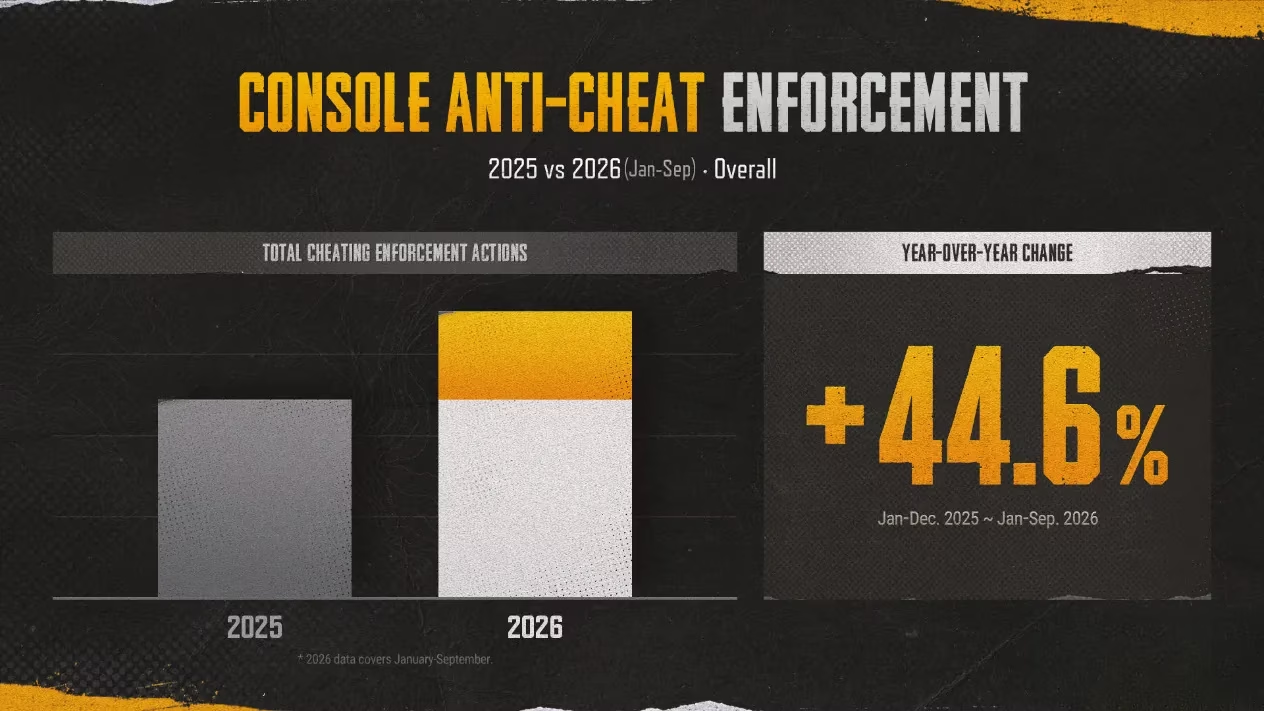
Last year, our console work leaned heavily on teamkilling and unauthorized input devices such as keyboards and mice. This year, we strengthened detection for those devices again while also expanding into stat abuse, network latency abuse, and single-fire assist tools. I have learned that a ban is not the end of the story. It is usually the moment when the arms race becomes visible.
| Focus area | What changed in 2026 | Timing |
|---|---|---|
| Unauthorized input devices | Stronger detection and penalties, including permanent bans | Since June 29 |
| Stat (KDA) abuse | Data-driven detection extended to consoles and later improved | December 2025, model improved in October 2026 |
| Network latency abuse | Permanent bans for lag switches after detection criteria were refined | Began September 2026 |
| Single-fire assist tools | Bans for fire rates physically impossible for a human | Began October 2026 |
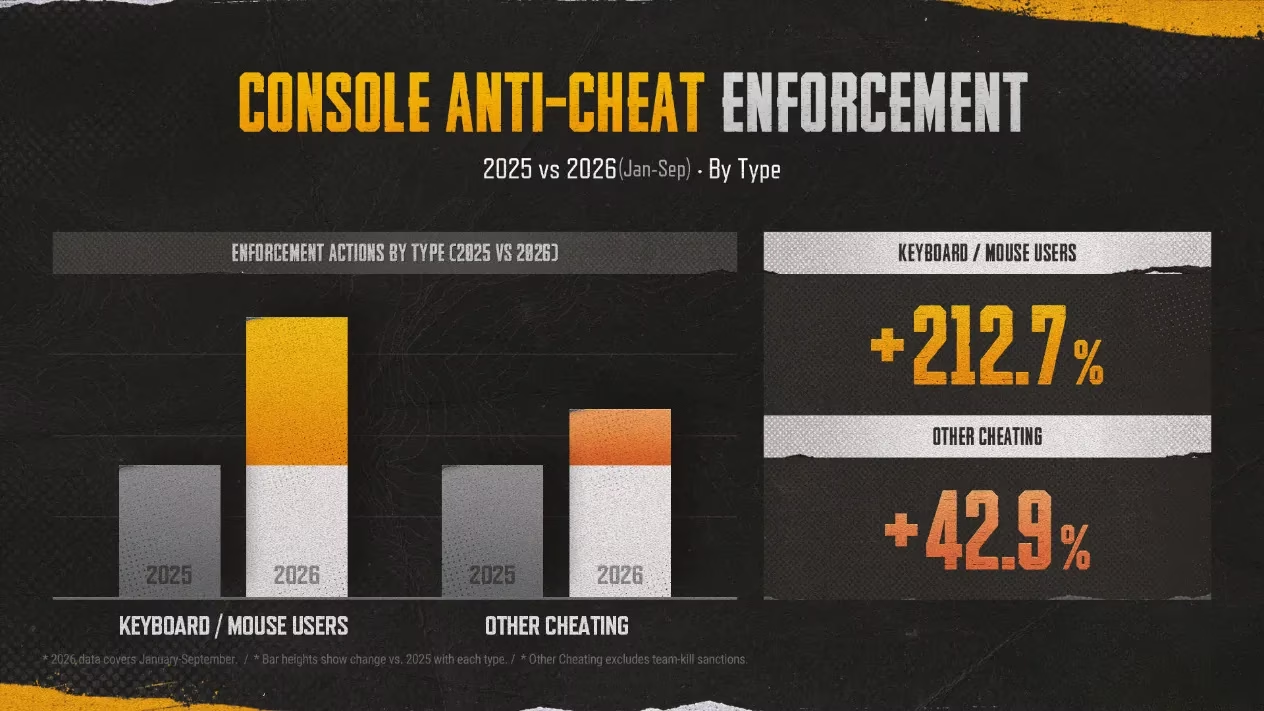
On unauthorized input devices, I have watched the same argument play out in report after report. A player feels that a fight was lost to something outside normal controller play, and our job is to turn that feeling into evidence. Since June 29 this year, we have imposed stricter penalties, up to and including permanent bans, on players confirmed to have used unauthorized input devices. We also retroactively applied penalties for device use that happened before the system was strengthened. That retroactive step mattered to me. It told players that we were not only looking forward from the day the rules changed.
KDA abuse is another area where I saw our approach mature. In the past, reports were reviewed manually, and that process could only stretch so far. We developed data-driven detection logic and extended our previously PC-only system to consoles in December 2025. We refined criteria for the console environment and for abuse involving the alternating use of multiple accounts. Then, in October this year, we improved the model again after identifying players who landed far apart from one another or frequently switched accounts to evade enforcement. That October update felt like a quiet victory. No dramatic announcement, just a better net.
Lag switches are perhaps the most frustrating category for me because they attack the foundation of competition. Intentionally causing network latency to gain an unfair advantage in combat is not clever; it is a way of stealing certainty from everyone else. After refining our detection and assessment criteria, we began issuing permanent bans in September this year. I expect that work to continue expanding, because latency abuse is a moving target.
Single-fire assist tools brought a different kind of case. We identified players using unauthorized tools that enable firing at a rate physically impossible for a human. We analyzed internal data to identify the behavior and began issuing bans in October this year. Using these tools is a clear violation of our Rules of Conduct, and I hope players who have relied on them stop now. The lobby is better when the outcome comes from skill and judgment, not from a device or a script.
🎮 The arms race is real. Since we strengthened our response to unauthorized input devices, I have seen attempts to make keyboard inputs mimic a controller’s analog inputs, along with key mapping features and input conversion or remapping functions provided by unauthorized devices or programs. We are detecting these attempts, but I know we cannot afford to become complacent. Our team will continue strengthening console anti-cheat in two key areas: more advanced input analysis to identify abnormal input patterns, and stronger detection of unauthorized assist devices, including converters and input device adapters, so we can respond quickly to new bypass attempts.
🛡️ On consoles, trust that everyone is competing on equal terms is especially important. I believe our responsibility goes beyond detecting cheating and issuing bans. Protecting players who play fairly from being unfairly harmed is also a responsibility we must uphold. That is why strong action must be paired with accurate verification. We refine detection criteria as new cheating types emerge, and we recheck the results after those criteria are applied. I do not want a fair player to feel punished by uncertainty, and I do not want a cheater to feel safe because our model stopped learning.
As I write this in late 2026, I am proud of the progress we have made and honest about how much work remains. We will keep listening to reports and feedback, and we will keep doing our best to create an environment where skill and judgment alone determine the outcome. Thank you for caring about fair play as much as we do. We will see you in the next dev letter.