
PUBG's anti-cheat 2025 review reveals 7.8 million bans and focuses on account security, including hardware cheat detection and 182k ad removals.
The year 2025 had been a rollercoaster for PUBG players like Alex. For months, the battlegrounds had felt like a treacherous minefield—not because of the enemies, but because of the rampant cheating. Then, as the calendar flipped toward 2026, whispers of change began to echo through the community. Could this really be the turning point everyone had been waiting for?
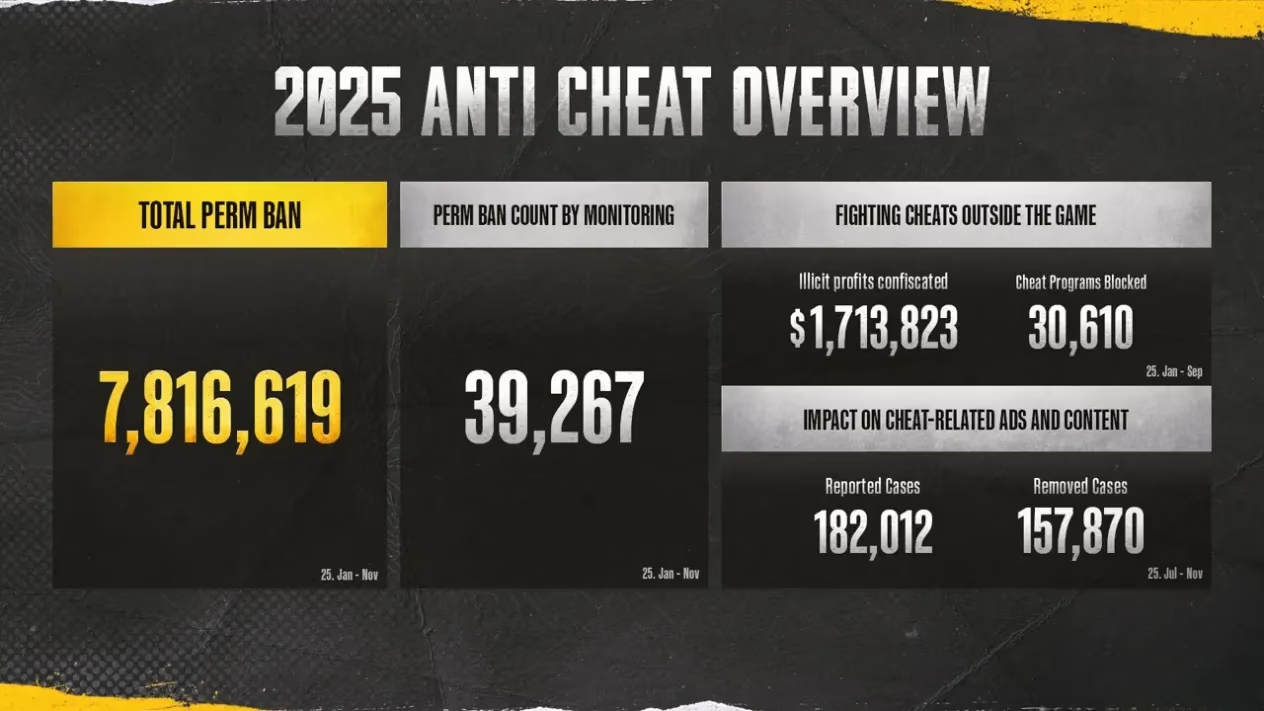
Throughout the early months of 2025, Alex had grown accustomed to reporting suspicious players. He wasn’t alone. Behind the scenes, PUBG’s anti-cheat team was orchestrating a sweeping reform. They had vowed to restructure internal processes, supercharging detection systems with real‑time monitoring and immediate video review upon each report. The results were staggering. By November 2025, over 7.81 million accounts had been permanently banned. Among those, approximately 39,000 cases were penalized solely through video evidence. For Alex, these numbers were more than statistics—they meant fewer aimbots ruining his final circles, and a renewed sense of fairness he hadn’t felt since the early days of the game.
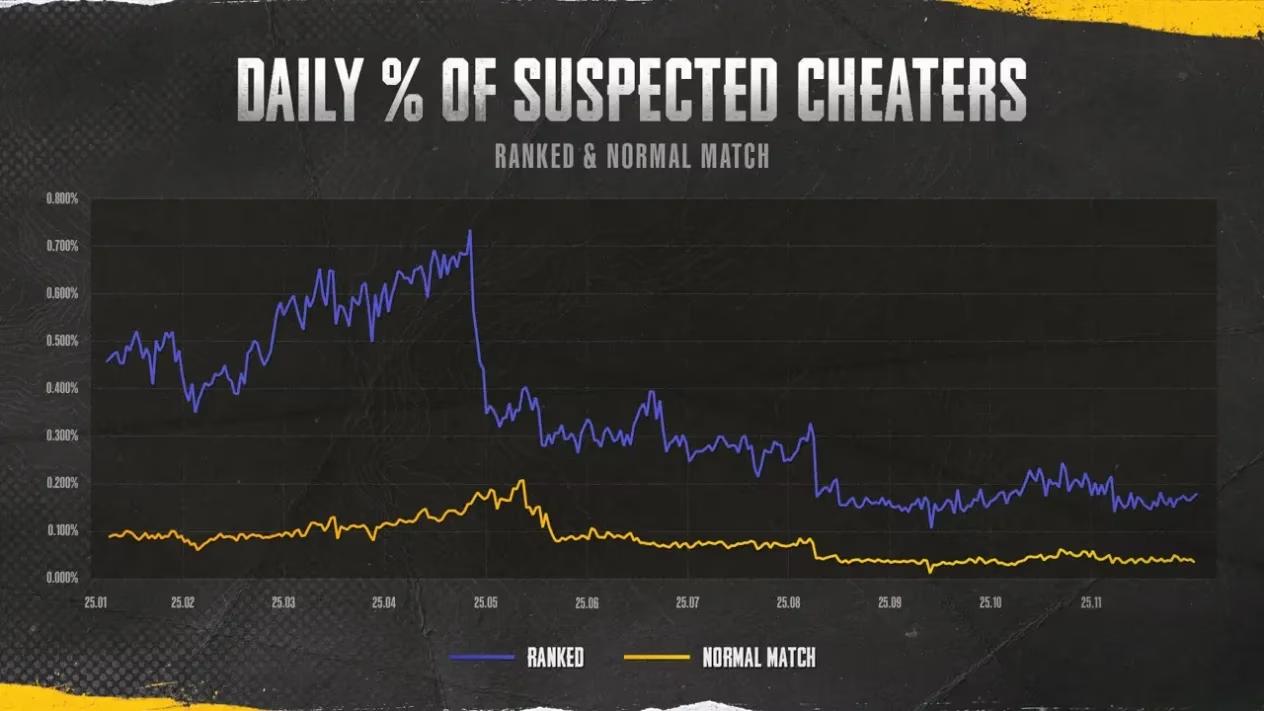
Why did it take so long? The truth was that combating cheats evolved into a technological arms race. Sophisticated hardware‑based cheats like DMA (Direct Memory Access) had become a nightmare for traditional anti‑cheat tools. But PUBG didn’t surrender. They introduced kernel‑driver detection capabilities and specifically targeted DMA hacks. This technical leap, combined with refined penalty standards, caused key cheat‑related metrics to decline steadily through the second half of 2025. By year’s end, they stabilized at historic lows.
But the war against cheaters wasn’t fought by developers alone. Alex remembered the countless times he had used the in‑game reporting system, wondering if his voice actually mattered. It did. The anti‑cheat team confirmed that player reports formed the bedrock of their detection improvements. Data from these reports fed directly into proprietary verification systems, creating a powerful symbiosis between community vigilance and automated defenses. The numbers backed this up: as of September 2025, legal actions had confiscated roughly $1,713,823 from cheat developers, and over 30,000 cheat programs had been blocked. Even more impressive, a massive cleanup of cheat‑related ads and content saw 182,000 reports filed by November 30, with 157,000 removed. It was a clear message—the community was no longer a silent victim.
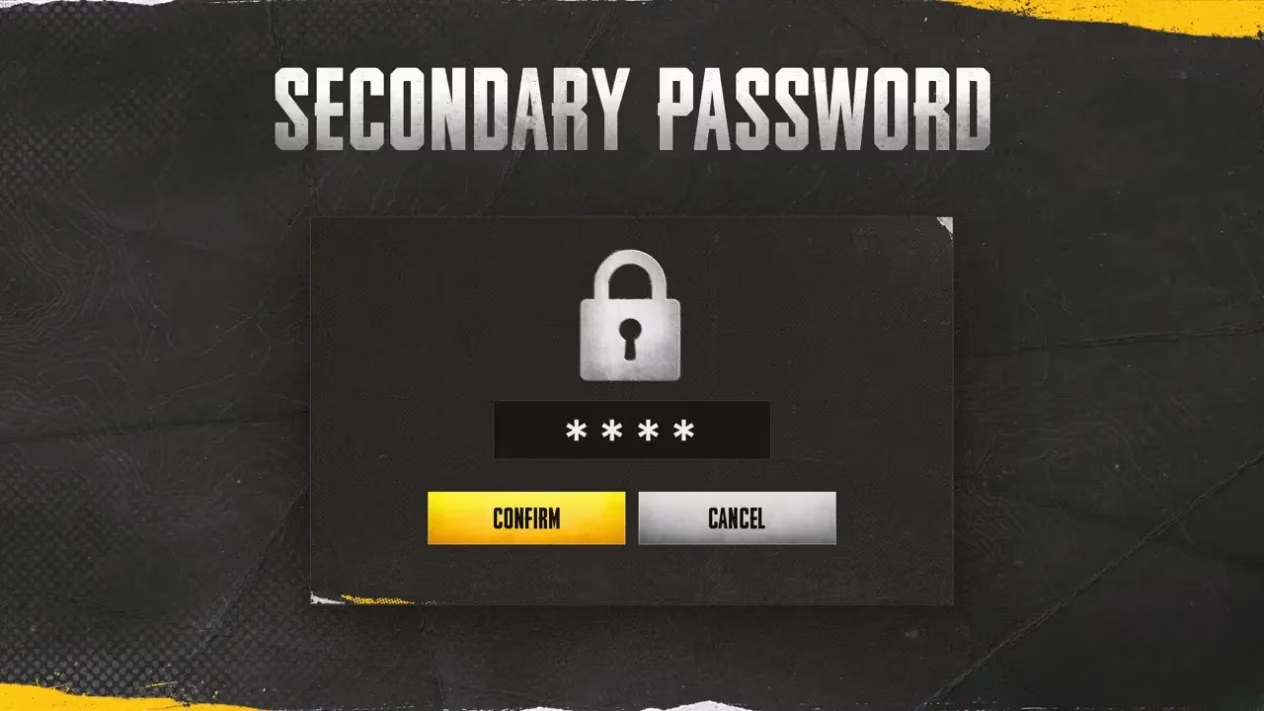
Despite these victories, a dark shadow lingered over player accounts. Alex had a friend whose account was stolen and later banned because it was sold to cheaters. It wasn’t just about losing in‑game currency; it was about years of achievements, memories, and rare cosmetics vanishing overnight. How could players protect their legacy? PUBG heard the outcry. After prolonged legal reviews and system development, the team announced a groundbreaking feature: the Secondary Password system, scheduled to launch in January 2026. This optional but robust layer would require additional authentication when accessing the game. For Alex, it meant his account—his digital home in Erangel and Miramar—would finally feel like a fortress. The announcement promised details in the upcoming 39.2 Patch Notes, and anticipation buzzed through every squad chat.
Yet, account security was only one front. Another insidious tactic had emerged: voice chat cheating ads. Alex had experienced it firsthand—random players in the pre‑game lobby blaring “Cheap hacks, visit www.xxx.com!” It shattered immersion and spread the disease of cheating like wildfire. The anti‑cheat team recognized that eradicating this required more than just manual moderation. In collaboration with their internal AI division, they developed AI‑based voice recognition technology designed to detect and flag such advertisements in real time. After successful internal verification, the team announced a rollout beginning in Q1 2026. The long‑term goal? A fully automated system that identifies cheat promotions and instantly enforces bans, creating a safer, quieter lobby for everyone.
At this crossroads in 2026, Alex reflected on the journey. He remembered the frustration of dying to invisible hands in early 2025, the skepticism when the anti‑cheat roadmap first appeared, and the cautious hope as key metrics dropped. Now, standing on the brink of two revolutionary features, he couldn’t help but ask: Is it finally possible to trust the battlegrounds again? The anti‑cheat team’s own words provided an answer—they knew some players still felt more needed to be done, and they viewed that feedback as a compass. For Alex, that compass pointed toward a horizon where fair play wasn’t just a slogan, but a lived reality.
2026 was no longer just the promise of a new year; it was the stage for PUBG’s most ambitious anti‑cheat chapter. With kernel‑level defenses, AI voice moderation, and fortress‑like account protection, the game seemed poised to reclaim its soul. Alex tightened his grip on his virtual M416, a smile creeping across his face. The war wasn’t over, but the tide had turned. He was ready to drop in again—this time, with trust.