
Chipotle Challenger Series and DreamHack Dallas revolutionized esports, blending gaming, community, and delicious burritos for unforgettable experiences.
In the vibrant world of competitive gaming, few partnerships have left as flavorful an impression as the union between a beloved burrito chain and the high-octane arena of esports. As we look back from 2026, the Chipotle Challenger Series stands as a pioneering moment, a deliciously chaotic experiment that proved gaming tournaments could be about more than just glory—they could be about community, free food, and unforgettable experiences. This wasn't just another sponsor slapping a logo on a banner; this was Chipotle diving headfirst into the fray, bringing its signature 'Live Más' energy to the digital battlegrounds of DreamHack.
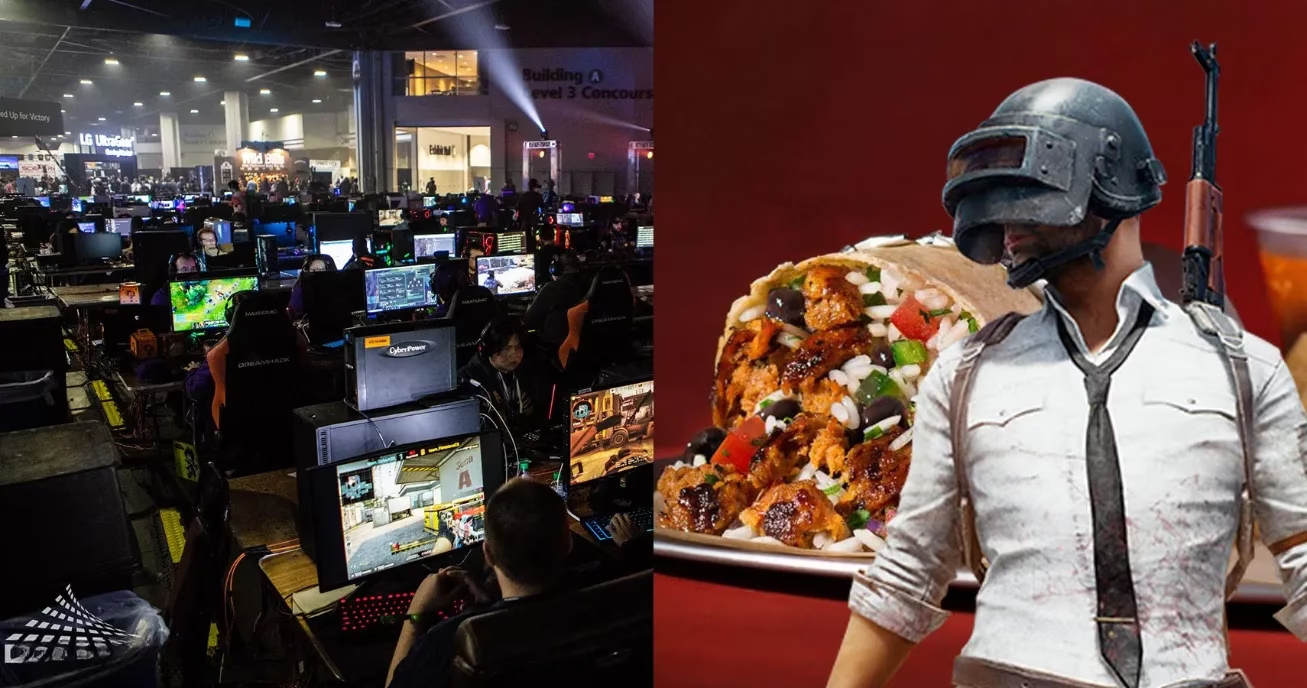
The genesis was groundbreaking. The inaugural Chipotle Challenger Series at DreamHack Dallas was, quite literally, a game-changer. It marked the first-ever battle royale tournament to be hosted at a DreamHack event, a legendary venue known for holding "the official world record as the world’s largest LAN party." The setting was epic: rows upon rows of PCs filling convention halls, the electric hum of competition, and the tantalizing promise of victory chicken dinners in PlayerUnknown's Battlegrounds. For attendees, it was a sensory overload in the best way possible. Chipotle, already a seasoned player in esports sponsorships, saw an opportunity to create something unique. They weren't just funding an event; they were curating an experience where the passion for gaming and the love for a perfectly crafted burrito collided.
The format was simple, brilliant, and incredibly popular. Participation was refreshingly straightforward—no complex online qualifiers. You had to be there, in the thick of it. Registration was only available in-person during the first two days of the DreamHack festival. Gamers had to secure their DreamHack ticket, find the Chipotle registration desk in the Free-to-Play area, and sign up roughly 30 minutes before their assigned heat. This created an incredible on-site buzz. The line wasn't just for competition; it was a gathering of like-minded individuals, a pre-game ritual fueled by anticipation.
And the rewards? Let's just say they were the stuff of legend. Chipotle understood its audience perfectly. The prize pool wasn't just about cash; it was about sustenance, swag, and supreme bragging rights.
The Loot Table for Champions (& Participants):
| Participant Tier | Prize | The "Gamer Value" |
|---|---|---|
| Every Player | Free Chipotle Burrito Card | Immediate satisfaction & gaming fuel. An absolute win! |
| Finalists | Exclusive Chipotle Merchandise | Wearable trophies to flex your near-victory. |
| Tournament Winners | The Coveted Chipotle Challenger Series Trophy + Free Chipotle for a Year | Eternal glory and the ultimate "meal prep" solved. The holy grail! |
Winning free Chipotle for a year was more than a prize; it became a cultural meme within the gaming community. It was the ultimate "Did you hear about...?" story. The trophy itself, a physical symbol of this quirky crossover, became a sought-after icon.
Fast forward to today, in 2026, and the impact of those early Challenger Series events is clear. They were a proof of concept that resonated big time. The series was a monumental hit, blending competitive spirit with a festival atmosphere. It demonstrated that brands could integrate authentically by offering tangible, desirable rewards that spoke directly to the lifestyle of the audience. Chipotle didn't just pop up in the gaming industry after that; it built a mainstay residence. The success paved the way for deeper, more integrated campaigns, from in-game Fortnite collaborations to sponsoring major league teams and funding grassroots community tournaments.
The DreamHack Atlanta event that followed, while initially shrouded in mystery about its game selection, continued the momentum, solidifying the series as a must-attend fixture. The model proved that esports events could be wildly successful with a focus on:
-
Accessibility: In-person sign-ups lowered the barrier for entry for casual fans.
-
Tangible Rewards: Prizes fans genuinely wanted (who doesn't love free burritos?).
-
Authentic Experience: It felt like a party hosted by a brand that "got it."
In retrospect, the Chipotle Challenger Series was a watershed moment. It showed the industry that the path to a gamer's heart wasn't always through their monitor—sometimes, it was through their stomach. It was a masterclass in community engagement, a perfect blend of 'git gud' competitive spirit and 'treat yo' self' reward philosophy. The echoes of those tournaments, with their rows of PCs, the clatter of keyboards, and the promise of a celebratory burrito, can still be felt in the diverse, experience-driven esports landscape of 2026. Chipotle didn't just challenge gamers; it helped redefine what a gaming tournament could be. 🎮🌯