
PUBG Mobile's 2020 India ban, driven by addiction fears and geopolitical tensions, reshaped mobile gaming and spurred BGMI's launch.
I still remember the day I woke up to the news—September 2, 2020. PUBG Mobile had just been banned in India, and the gaming community was in shock. I mean, one minute we were dropping into Erangel, and the next, our screens were frozen on a "server connection" error. It felt like a bad dream, but it was all too real.
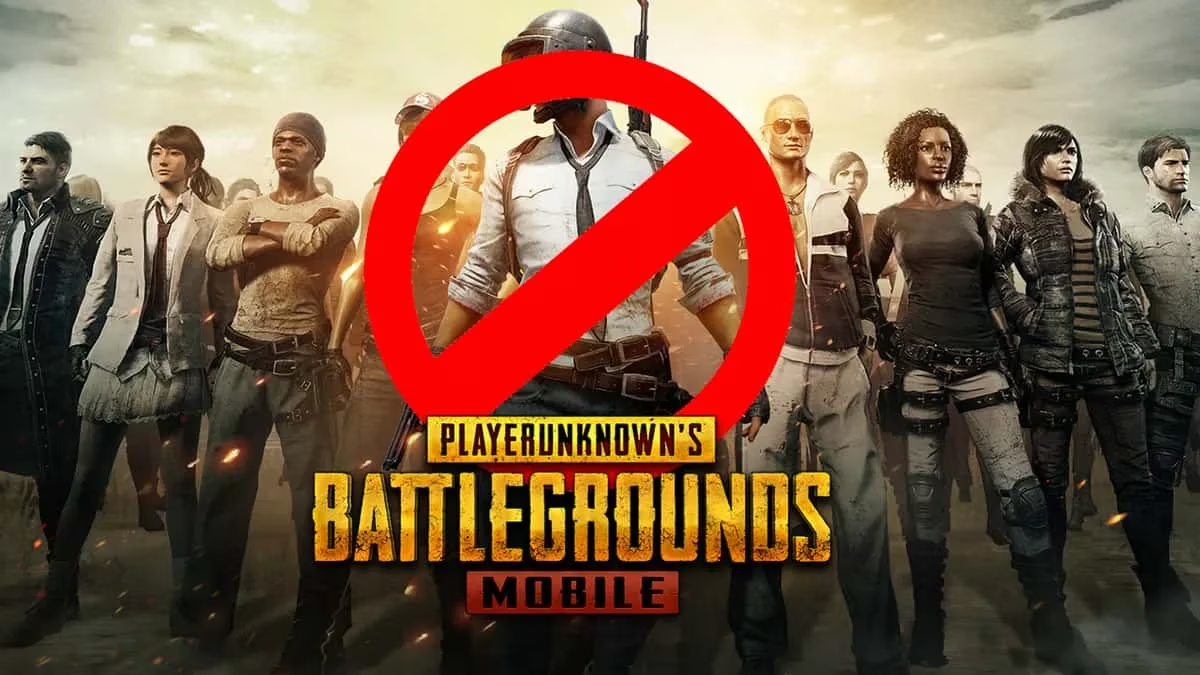
Back then, PUBG Mobile wasn’t just the most popular mobile game in the country—it was practically a lifestyle. Over two years, Indian media had been flooded with stories about teens becoming dangerously addicted. Exam results were tanking, parents were desperate, and in some extreme cases, the game was even linked to deaths. I remember a student association in my city once petitioned the government to ban it because they believed it was ruining our education. Honestly, I brushed it off at first. Who actually thought the government would listen? But they did.
The Interior Ministry’s ban targeted PUBG Mobile and 118 other apps, citing cybersecurity threats and rising tensions with China. The official statement was chilling: the apps were “prejudicial to sovereignty and integrity of India, Defence of India, Security of State and Public Order.” Reading that, I realized this wasn’t just about gaming addiction anymore. It was geopolitics playing out on our phone screens. The government said they had received countless complaints about these apps stealing user data and transmitting it to servers outside India. Looking at the full list—Baidu, WeChat Work, Tencent Weiyun, Rise of Kingdoms, Mobile Taobao, Youku, Sina News, and yes, even a VPN for TikTok—it was clear they were cracking down on anything with Chinese connections.
But PUBG Mobile was the headline grabber. It had over 50 million active users in India at the time, and people were obsessed. The addiction was so severe that in March 2019—well before the national ban—police in Gujarat arrested ten students for playing the game. “Our team caught these youths red-handed. They were taken into custody after they were found playing the PUBG game,” said police inspector Rohit Raval. I mean, getting thrown in the back of a police van just for a chicken dinner? That’s wild. But that’s how paranoid some regions had become. The national ban didn’t come out of nowhere; it was the culmination of years of public outcry and political maneuvering.
Now, let’s fast forward to 2026. It’s been six years, and the mobile gaming landscape in India looks completely different. That ban was a shock to the system, but honestly, it might have been the wake-up call we needed. For months afterwards, the Indian gaming community scrambled for alternatives. Some turned to knock-off clones, others tried PC gaming, but most of us just… waited. And then, in July 2021, Battlegrounds Mobile India (BGMI) happened. It was almost PUBG Mobile, but tailored to meet Indian data residency requirements and packaged with constant reminders to take breaks and not overplay. I remember the collective sigh of relief when we finally got to drop back into those familiar maps.
However, the journey wasn't smooth. In 2022, BGMI itself got yanked from app stores after further government scrutiny over data security. Once again, we were left hanging. But by May 2023, after a long compliance overhaul, it returned—this time with stricter server controls and a lot more transparency. And boy, did it come back strong. Fast forward to 2026, and BGMI is the undisputed king of Indian mobile esports. We’re talking over 120 million active monthly users, massive tournaments with prize pools that rival some PC events, and a whole new generation of streamers who started because of the BGMI comeback. The game has actually matured; it’s less about mindless grinding and more about strategy and community.
Here’s a quick timeline of how everything went down:
| Year | Event |
|---|---|
| 2019 | Ten students arrested in Gujarat for playing PUBG Mobile after a regional ban. |
| 2020 (June) | India bans TikTok and other Chinese social media apps. |
| 2020 (September 2) | PUBG Mobile banned along with 118 other apps over data and sovereignty concerns. |
| 2021 (July) | Battlegrounds Mobile India (BGMI) launched by Krafton, tailored to Indian regulations. |
| 2022 | BGMI temporarily removed from app stores amid renewed data security reviews. |
| 2023 (May) | BGMI returns after compliance, with enhanced player protections. |
| 2026 | BGMI dominates the Indian gaming scene; local esports ecosystem flourishes. |
Of course, not everything is perfect. The ban did spur some homegrown attempts like FAU-G, but let’s be real—none of them captured our hearts the way BGMI did. However, I do think the whole episode forced Indian developers to think bigger. These days, we’re seeing more original battle royales and mobile games that are actually good, not just quick cash grabs. The government’s strict stance on data privacy also pushed a lot of international studios to set up local servers and offices, which has been a net positive for the industry.
Looking back, I can’t help but feel a mix of nostalgia and relief. That 2020 ban was a gut punch to every PUBG Mobile lover, but it also pulled a lot of us out of a pretty unhealthy loop. I know friends who literally failed their exams because they couldn’t stop playing; the forced break gave them a chance to reset. And now? Now we get to enjoy a game that’s just as fun but with boundaries that make sense. So, if you ask me whether the ban was a good thing in the long run—I’ll say it was messy, painful, but ultimately, exactly what the Indian gaming scene needed.
These days, I still squad up on Erangel, but through BGMI, and it feels like we’ve all grown up a little. 🎮🇮🇳