
Krafton's bold NFT and Web 3.0 strategy for 2026, in partnership with NAVER Z, promises a revolutionary creator-driven metaverse ecosystem.
Alright folks, buckle up, because here I am, your friendly neighborhood gamer, diving headfirst into the swirling vortex of controversy that is NFTs in gaming. And let me tell you, 2026 is shaping up to be a wild ride. Just when I thought I'd seen it all, PUBG: Battlegrounds' creator, Krafton, decides to throw its hat into the digital ring. They're teaming up with NAVER Z, the brains behind the massive ZEPETO metaverse with its 290 million users, to cook up a brand-new NFT-powered virtual world using Unreal Engine. It's like watching your favorite battle royale champion decide to become a digital real estate mogul overnight! 🎮➡️🌌
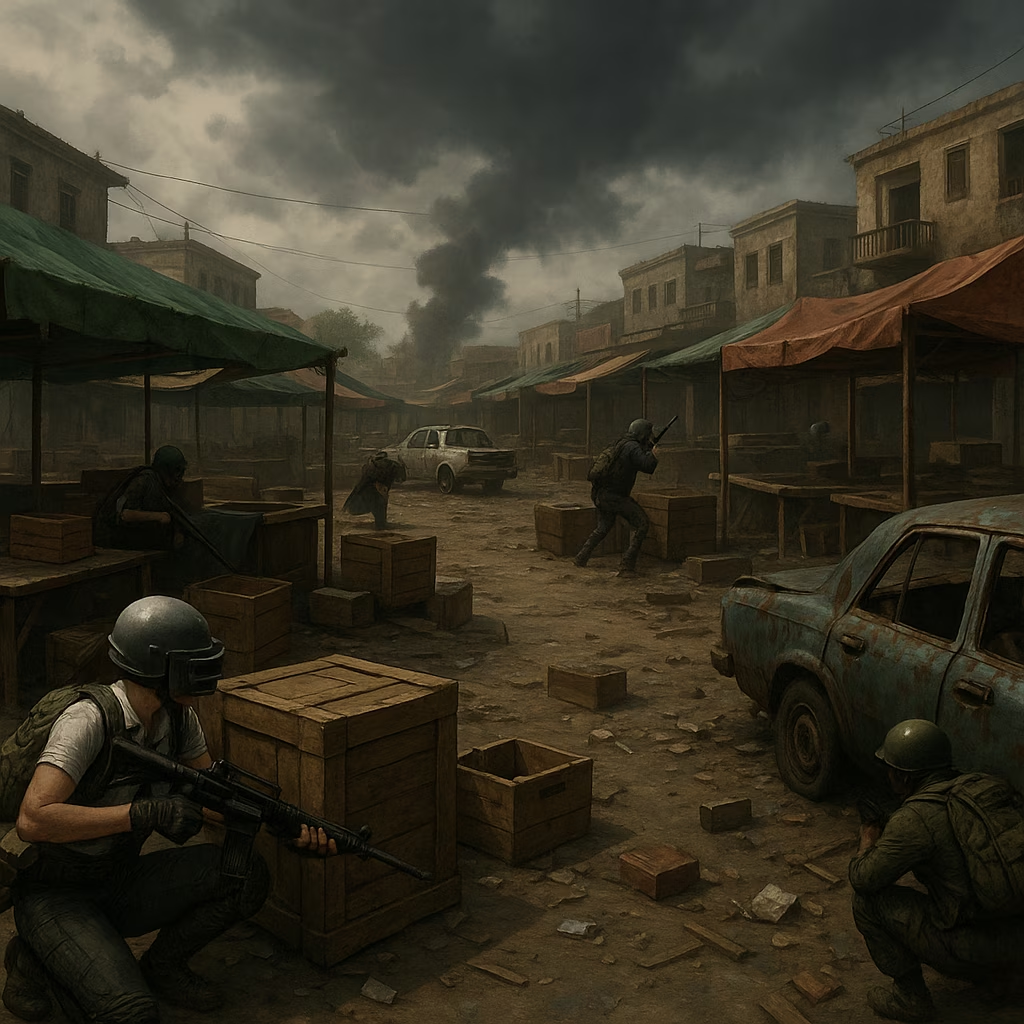
So, what's the big idea? Krafton isn't just making another game; they're building what they call a "creator-driven ecosystem" for Web 3.0. Imagine taking all that chaotic, emergent gameplay knowledge from PUBG and applying it to a universe where players can build, own, and trade their creations as NFTs. HyungChul Park, Krafton's Web 3.0 lead, seems pretty confident. He talks about combining Krafton's tech with NAVER Z's experience to create a "high-quality... open metaverse" that'll "vitalize the global creator economy." Big words! It sounds less like a game and more like a digital nation they're trying to found. I can't help but wonder if the first user-generated content will be a replica of Erangel where you have to pay an NFT toll to cross the bridge.
The plot, as they say, thickens. This partnership announcement came hot on the heels of Krafton making some serious financial moves. They invested millions in two companies: Seoul Action Blue (a big player in the art auction world) and its subsidiary, XBYBLUE, which deals in securing intellectual property. Why? Because these investments are all about the NFTs, baby! Krafton signed agreements with them too, all focused on developing NFT-oriented products. They're not just dipping a toe in; they're doing a cannonball into the deep end of the digital asset pool. It's a full-scale, multi-pronged assault on the metaverse, and they're bringing art and IP experts along for the ride.
Now, let's address the Goliath in the room: the NFT controversy. In the gaming world, mentioning NFTs is like yelling "fire" in a crowded theater—it causes instant, chaotic reactions. And for good reason! The track record is... messy.
A Brief History of NFT Drama in Gaming:
| Company/Figure | NFT Action | Community Reaction | Outcome |
|---|---|---|---|
| Team 17 (Worms) | Announced NFT project | Immediate, intense backlash | Cancelled within 24 hours 🚫 |
| GSC Game World (S.T.A.L.K.E.R. 2) | Announced NFT plans | Fan uproar | Cancelled within 1 HOUR ⏰💥 |
| Troy Baker (Voice Actor) | Partnered on an NFT project | Major fan disappointment | Quickly withdrew 😬 |
| Itch.io (Indie Marketplace) | Stated opinion on NFTs | Supported by many developers | Called NFTs a 'scam' 🎯 |
| Ubisoft (Assassin's Creed) | Launched Quartz NFT platform | Overwhelmingly negative | Exec said "gamers don't get it" 🤦 |
Looking at this hall of shame (or fame, depending on your perspective), you can see why gamers are skeptical. It feels like companies see a gold rush and jump in without considering what players actually want. We want fun, engagement, and fairness—not what often feels like a cash grab exploiting FOMO (Fear Of Missing Out).
Yet, despite this rocky landscape, the gold rush metaphor is painfully accurate. Krafton is just the latest prospector. They're joining a line that includes:
-
GameStop: The meme-stock hero trying to launch its own NFT marketplace. 🦍
-
Ubisoft: Pushing forward with its Quartz platform despite the boos from the crowd.
-
And countless others testing the waters, often getting burned by the community's heat.
So, what makes Krafton think they'll be different? Their bet seems to be on scale and creator tools. They're not just selling digital helmets; they're talking about a whole ecosystem. The partnership with NAVER Z is key. ZEPETO has shown you can get millions to engage with avatar-based social spaces. Combine that with Krafton's experience in massive, persistent online worlds and their new art/IP partnerships, and you have a recipe for... something. Whether it's a delicious cake or a confusing stew remains to be seen.
For me, the player, it's a mix of curiosity and caution. The idea of a truly player-built world, where my creations have verifiable ownership, is intellectually fascinating. It's the promise of a new tier of gaming economy. But the bitter aftertaste from past failures is hard to ignore. Will this be a vibrant new frontier for creators, or just another corporate playground where fun is secondary to finance?
Krafton's move is a huge gamble. They're leveraging their PUBG fame to enter one of the most divisive spaces in modern tech. In 2026, the conversation has evolved from "What are NFTs?" to "What do they actually do for my gameplay experience?" Krafton and NAVER Z will need to answer that question not with jargon, but with genuine, engaging utility that doesn't feel predatory. Otherwise, they might just end up as the next bullet point in a list of NFT projects that crashed and burned faster than a squad landing at Pochinki. Only time, and the unforgiving court of player opinion, will tell. 🧐