
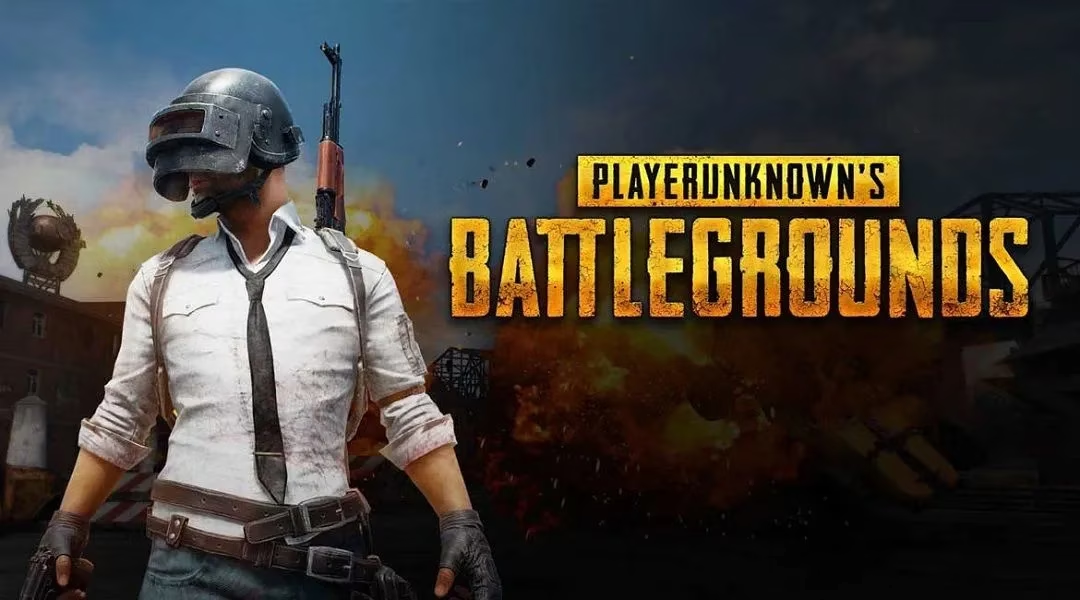
PUBG's meteoric rise on Steam redefined the gaming landscape, becoming the third highest-grossing game and igniting the battle royale revolution.
I still remember the day I first dropped into Erangel, my hands trembling with a mix of excitement and pure terror. Little did I know, I wasn't just booting up another game; I was stepping into the heart of a digital revolution that would reshape the entire gaming landscape. Fast forward to 2026, and the echoes of that first chicken dinner still ring in my ears. The journey from a scrappy early-access title to a Steam titan has been nothing short of cinematic, a rollercoaster I've been strapped into from the very first circle. The numbers? They tell a story of utter dominance. We're not just talking about a popular game; we're talking about a cultural tsunami that became the third highest-grossing game in the entire history of Steam. Let that sink in. In the pantheon of digital legends, PUBG carved its name in stone, right up there with the all-time greats, and I was there, looting and shooting through it all.
The mastermind behind the platform itself, Gabe Newell, pointed a finger straight at the heart of this success during a legendary roundtable. He didn't just give us a pat on the back; he revealed the secret sauce. Valve's relentless, almost obsessive, investment in hardware and futuristic tech wasn't just for show—it was the rocket fuel that launched PUBG into the stratosphere. Newell called it an "investment in the future," and boy, was he right! This wasn't just about having a good game idea; it was about having the technological playground to build it on. The tools, the infrastructure, the sheer computational power—it was all laid out like a buffet for hungry developers. And PUBG? It feasted. It capitalized on years of multiplayer evolution, on network technology that could handle 100 panicked players in a shrinking field, and critically, on the explosive rise of the Chinese PC gaming market. We weren't just playing a game; we were witnessing the perfect alignment of stars in the gaming universe.
Looking back, the rise of the battle royale genre feels like watching a dormant volcano finally erupt. And PUBG was the first, earth-shattering blast. The records it shattered weren't just broken; they were vaporized:
-
Concurrent Player Mountains: We scaled peaks of player counts that previous games could only dream of, turning servers into bustling digital nations.
-
The Million-Sprint: Becoming the fastest early-access title to sell a million copies on Steam wasn't a milestone; it was a declaration of war on the status quo.
This success sent shockwaves through every major publisher's boardroom. You could practically hear the gears turning, the emergency meetings being called. "How do we make our own?" The whispers of competitors became roars, and the genre I loved became the hottest battlefield in game development itself. Every studio, it seemed, wanted a piece of the chicken dinner. And amidst all this frenzy, Newell's other comment became the source of endless speculation in my friend group: Valve was returning to making games. The rumor mill went into overdrive. Were we, the dedicated players, about to see a Valve-crafted battle royale? With their pedigree in multiplayer genius—Team Fortress, Left 4 Dead, Dota—the mere possibility was enough to keep us up at night with theories and dreams.
Now, in 2026, the landscape is crowded with royale contenders. But the question that burns in my mind, as I queue up for another match on the latest map, is about legacy. How did PUBG hold its ground? The answer lies in that foundational success. It wasn't just a game mode; it was a paradigm shift. The high-profile games that followed, the ones rumored to always include a "battle royale mode," are all living in the world PUBG built. It defined the tension, the loot-or-perish gameplay, the sheer, unadulterated joy of being the last one standing. Retaining that #3 all-time grossing spot on Steam is a testament to its foundational power. It's more than data on a server; it's the memory of a million heart-pounding final circles, the camaraderie of a squad pulled back from the brink, the collective gasp of an entire gaming community learning what it meant to survive.
PlayerUnknown's Battlegrounds was available on PC and Xbox One, but its impact is available everywhere. It transformed players like me into pioneers of a new virtual frontier. We weren't just customers; we were colonists in a brutal, beautiful, and utterly unpredictable new world. The game provided the guns, the vehicles, and the blue zone. But we, the players, wrote the stories. And what a wild, unforgettable story it has been. The chicken dinners have never tasted so good.