
Brendan Greene, PlayerUnknown, leaves Krafton to launch PlayerUnknown Productions, aiming for massive-scale open world gaming innovation.
In the ever-shifting currents of the gaming industry, few figures loom as large as Brendan Greene, better known as PlayerUnknown. As of 2026, the creator of the battle royale genre has once again defied expectations, leaving the corporate embrace of Krafton to found PlayerUnknown Productions in Amsterdam. Like a seasoned sailor abandoning a luxury cruise liner to build a new kind of vessel from scratch, Greene is charting a course into uncharted waters—massive-scale open worlds that promise to redefine interactive digital spaces.
A Legacy Forged in Mods and Mayhem
Greene’s journey into gaming history reads like a fire that started in a backyard forge and spread to engulf entire forests. His early experimentation with a DayZ mod, back when DayZ itself was still an Arma 2 mod, planted the seeds for what would become a global phenomenon. In 2015, he lent his expertise to H1Z1’s battle royale mode as a consultant, and by December 2017, PlayerUnknown’s Battlegrounds (PUBG) erupted onto the scene with the force of a meteor strike, reshaping the multiplayer landscape overnight.
The battle royale genre flourished under this explosive debut, with titles like Fortnite taking the blueprint and painting it in a rainbow of pop-culture hues. Yet Greene, ever the visionary, didn't rest on his laurels. In 2019, he stepped away from active development on PUBG to spearhead a new 'Special Projects' division, dedicated to exploring deeper "interaction and connection within the game space." This move was a clear signal that the architect of last-man-standing combat had his eyes on something far more ambitious.
Departure and a New Amsterdam Studio
Fast forward to 2026, and Greene’s departure from PUBG Corporation—and thus from Krafton proper—has officially materialized. In a statement brimming with gratitude, Greene acknowledged the opportunities afforded him, saying, "I'm so very grateful to everyone at PUBG and Krafton for taking a chance on me... Today, I'm excited to take the next step on my journey to create the kind of experience I've envisaged for years." Krafton retains a minority stake in the new venture, a wise move that keeps a thread connecting the two entities without clipping Greene’s wings.
PlayerUnknown Productions is described as "exploring the systems needed to enable massive scale within open world games." It’s a statement that sounds almost like a sphinx’s riddle, but those familiar with Greene’s obsession with emergent, player-driven narratives know that he’s hunting for a kind of digital philosopher’s stone—a set of tools that can turn static worlds into living, breathing ecosystems where millions of players can coexist and create their own stories simultaneously.
The Name Change and What It Means
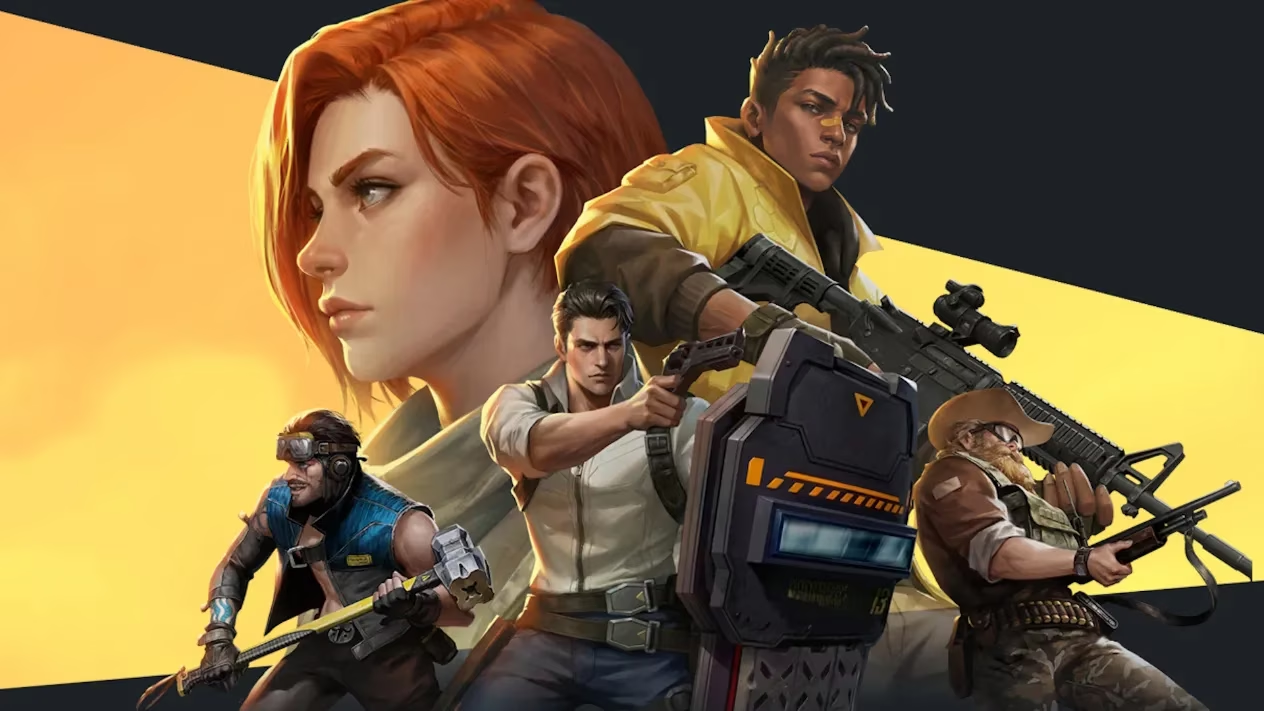
The renaming of PUBG to PUBG: Battlegrounds was, in many ways, the canary in the coal mine. It silently marked the end of Greene’s direct involvement and the game’s shift toward being a branded product rather than a singular creator’s vision. For fans, it felt like a chapter closing; for Greene, it was probably the final page turning on an old book so he could start writing a new one.
Krafton itself hasn't stood still either. The company has morphed into an AI defense powerhouse, signing a deal with a Korean aerospace firm that includes up to a $1 billion investment to expand the physical AI ecosystem. This pivot underscores how the gaming world’s giants are now looking beyond entertainment, seeking to apply real-time simulation and massive-scale networking to military applications. Greene’s new studio, by contrast, remains firmly rooted in crafting virtual experiences—but the cross-pollination of ideas between these two spheres could yield fascinating results in the future.
Why This Matters in 2026
At a time when the gaming landscape is saturated with battle royale clones and live-service fatigue, Greene’s move is a much-needed gust of fresh air. By stepping away from the genre he fathered, he’s avoiding the trap of becoming a one-hit wonder and instead positioning himself as a perennial explorer. The Amsterdam-based studio, with its northern-European sensibility for order and innovation, seems a fitting crucible for the systems-driven open worlds he dreams of.
Industry insiders are already drawing comparisons to a new Renaissance. If PUBG was the Big Bang that gave birth to the battle royale universe, then PlayerUnknown Productions might be aiming for the galaxies that form afterward—vast, interconnected, and governed by rules we can only begin to imagine. It’s like watching an architect who built the first skyscraper now trying to design a floating city; the ambition is staggering, but the foundation is rock-solid.
Looking Ahead
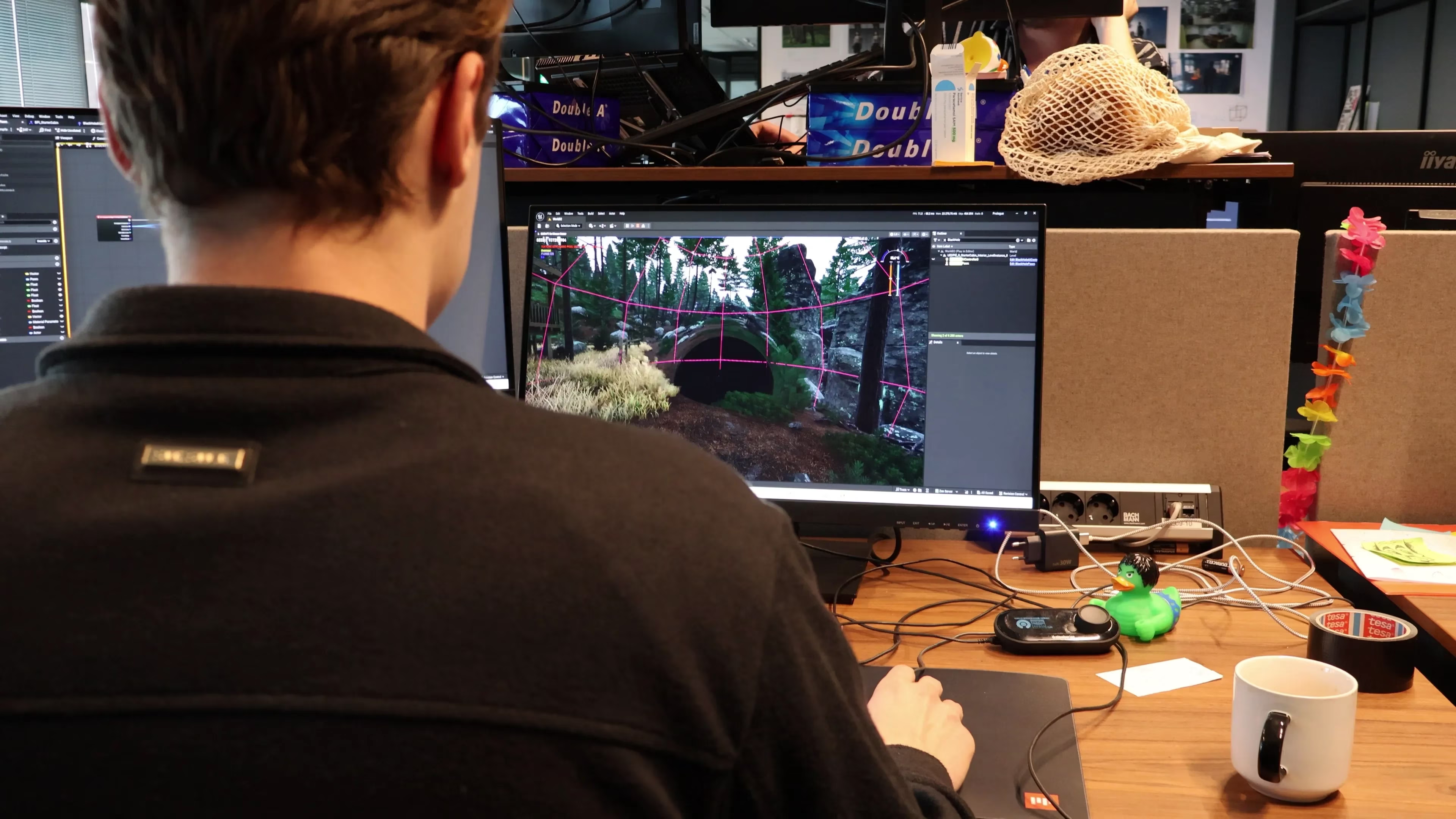
What will this massive-scale open world actually look like? Details remain scarce, but Greene has promised "more to reveal at a later date." Based on his track record, we can expect a focus on player agency, systemic interactions, and a rejection of scripted linearity. The modjam held recently at the studio—a chaotic 48-hour sprint where developers deliberately broke their own game—proves that the experimental spirit is alive and well.
In an era where many creators sell out or burn out, Brendan Greene has chosen to forge a new beginning. Whether you see him as a digital cartographer mapping the future or a wizard conjuring impossible worlds, one thing is clear: PlayerUnknown’s next act will be worth watching. And if history is any guide, the ground beneath our feet is about to tremble once again. 🎮🌍