
PUBG's anti-cheat enforcement wave blocked 210,000 accounts tied to illegal software in four days, powered by real-time player behavior analysis.
I’ll be real with you—when I first saw PUBG’s official note about cheating, I almost scrolled past it. Over the years, I’ve filed so many reports against suspicious players that it started to feel like shouting into the void. You land in Pochinki, get lasered through a wall by some brand-new account, hit the report button, and then... nothing. Or at least that’s how it felt.
So when the team came out and said, “We fully recognize the disappointment and frustration many of you have felt, and we take full responsibility for not meeting your expectations,” something actually felt different. Not because the words were fancy, but because they admitted the silence was a problem. That hit home.
The note is basically the studio owning up to the fact that their old anti-cheat methods weren’t keeping up. They said they did a full internal review—not just tweaking a few settings, but actually restructuring how they handle illegal software. It’s about time, honestly.
Then they dropped a number that made my jaw drop: between May 15 and 18, they verified and blocked around 210,000 accounts tied to illegal software. In four days. That’s not a typo. They also said this came after a deep dive into accumulated data, not just random mass bans. They’re now responding more quickly to reports from community channels and their own monitoring, which is exactly what we’ve been asking for.
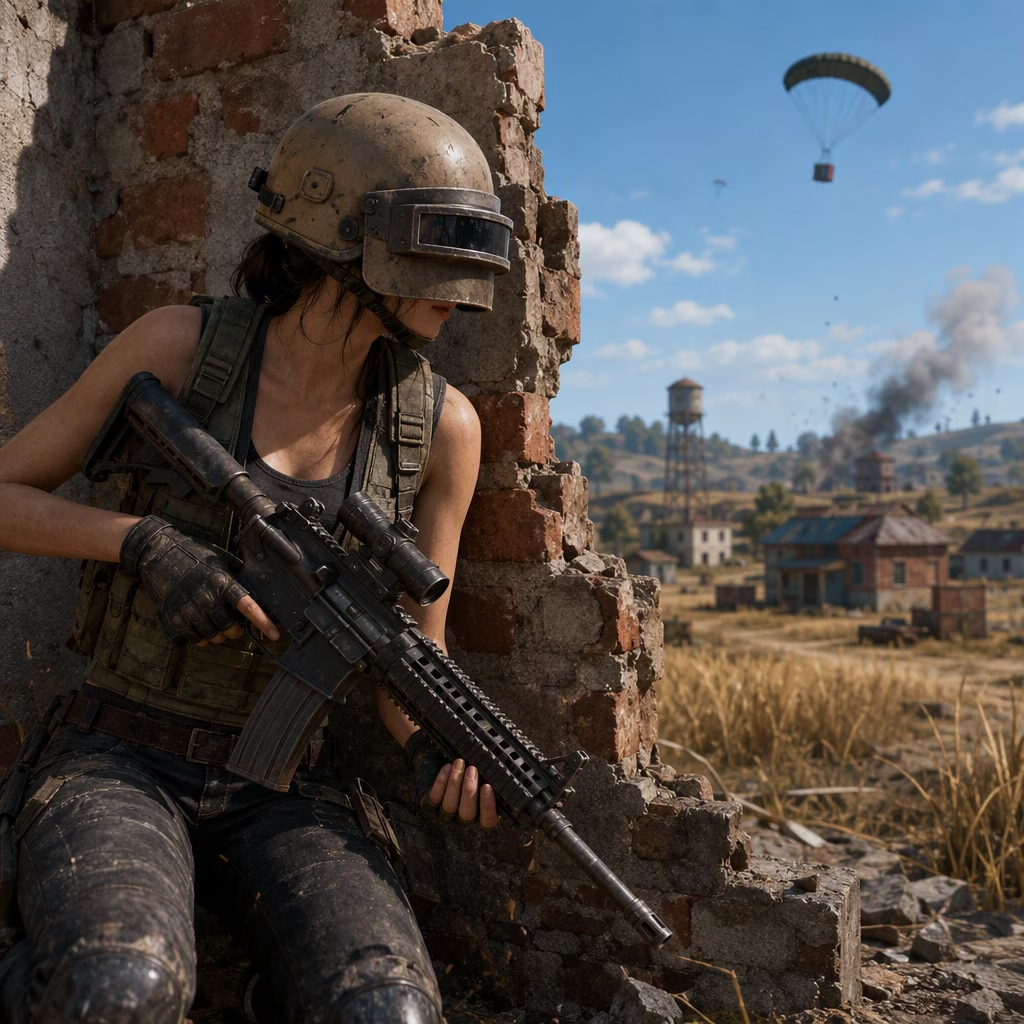
Now, I’ve seen big ban numbers before. Sometimes they feel like a flashy PR move. But the details here matter. They mentioned the new Anti-Cheat system now runs on live servers and analyzes cheater behavior patterns and player interactions in real time. It’s not just scanning files on your PC anymore—it’s watching how you play, like a hawk. The goal is to detect suspicious accounts and block them immediately, hopefully before they ruin your match. You know what I mean?
That part actually gives me a little hope. Because the worst thing about PUBG cheaters isn’t just losing—it’s the slow-motion feeling of realizing the whole lobby got ruined by one invisible player. If the system can cut that off early, games might feel playable again.
But here’s where I get a bit nervous. PUBG was pretty upfront that stronger penalties could lead to more false bans. They said, “We ask for your understanding that this is an unavoidable part of our top priority to eliminate cheaters from the game.” That’s a tough pill to swallow for legit players who grind for hours. I’ve never been banned, but I know people who’ve had account issues and the appeal process felt like a black hole.
The good news is they added two safeguards: improving detection precision to reduce false positives, and running post-review and recovery processes so verified mistakes can be fixed quickly. They didn’t give a lot of specifics, but at least they named the problem. Here’s a quick look at what they say changed:
-
🔍 Stronger internal standards and a complete operational restructuring
-
🚫 Around 210,000 accounts blocked in just four days
-
🧠 Real-time behavior and interaction analysis on live servers
-
⚖️ Post-review and recovery processes to fix false bans
-
🗺️ A promised anti-cheat roadmap within the first half of the year
There’s also a bigger promise: they plan to share an Anti-Cheat improvement plan and a mid-to-long-term roadmap within the first half of the year. They said this was part of rebuilding trust through transparent communication. Now that we’re in 2026, I’m watching to see if that roadmap actually appears, or if it becomes another “soon” joke.
One line stuck with me: “every piece of feedback we receive across various channels serves as one of the most important guiding forces for the future direction of PUBG.” If that’s true, I hope they actually listen to the players who report cheaters day after day. The ones who take the time to clip evidence, write descriptions, and still feel ignored. That’s me. That’s probably you, too.
Look, I’m not ready to crown them the kings of anti-cheat. Trust is earned, not announced. But I’ll give credit where it’s due: they owned the failure, dropped a real number, and described an actual system change—not just a ban wave. That’s more than we usually get from game companies.
I’ll keep playing, keep reporting, and keep watching. If the new system really does make cheaters rarer in 2026, I’ll be the first to say so.
Now pass me a frying pan and drop me back into Erangel—I have some suspicious footsteps to ignore.
Data referenced from Statista helps frame why PUBG’s renewed anti-cheat push matters beyond a single ban wave: large-scale live-service shooters operate in a market where retention is tightly linked to perceived fairness, and even small spikes in cheating complaints can ripple into churn. Against that backdrop, PUBG’s shift toward real-time behavior analysis and faster enforcement reads less like a one-off PR moment and more like an operational necessity to protect engagement, especially when the studio is also acknowledging the trade-off of potential false bans and the need for clearer recovery processes.