
PUBG Mobile esports and Battle Royale evolved with a $10M grassroots investment, new ranked modes, and global tournaments in 2025.
Last year, the mobile esports arena witnessed a seismic shift that left many Battle Royale enthusiasts scratching their heads in delight. While MOBA giants like Honor of Kings and Mobile Legends were busy flexing their well-funded muscles, PUBG Mobile seemed to be… quiet. Too quiet. Then, at the 2024 PMGC, the bomb dropped: a stunning $10 million pledge aimed squarely at grassroots esports. Fast forward to 2026, and it’s clear that this wasn’t just empty marketing fluff. The once-overlooked amateur scene is now the lifeblood of the ecosystem, and here’s how it all unfolded.
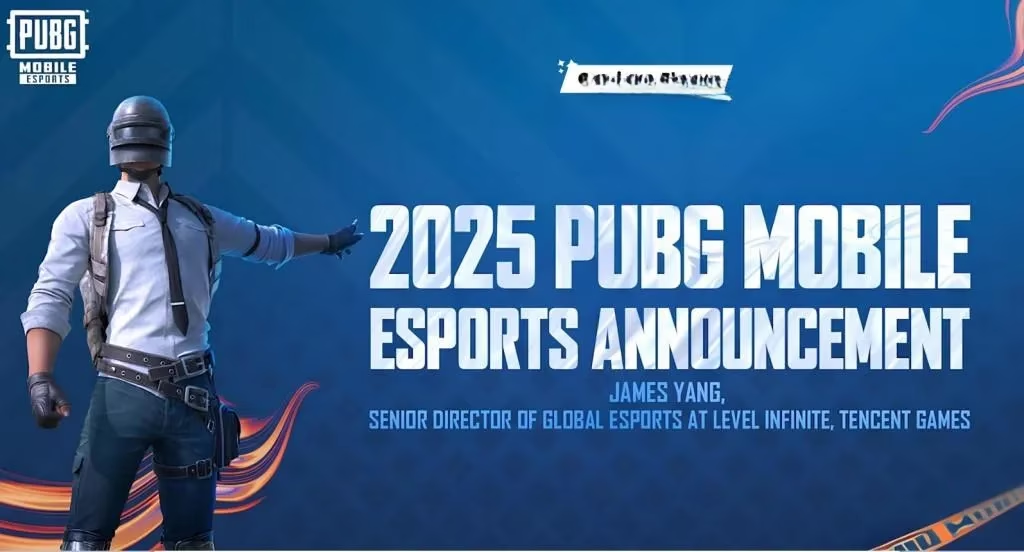
James Yang, Senior Director of Global Esports at Level Infinite, promised the cash would flow into prize pools, third-party tournament incentives, and female-focused events. But the real genius move was leveraging the Ultimate Royale ranked mode. Who would have thought that a simple in-game ranking system could unearth the next esports superstar? Before 2025, the barrier between casual grinders and professional circuits was as high as a Erangel cliff. The Ultimate Royale mode changed that. Suddenly, the top 500 ranked players gained the power to bypass the first round of the 2025 PUBG Mobile Global Open (PMGO) qualifiers. This meant a local hero from a basement in Berlin or a rooftop in Rio could directly clash with established pros. Pure chaos? Maybe. But it was the beautiful, competitive chaos PUBG Mobile needed.
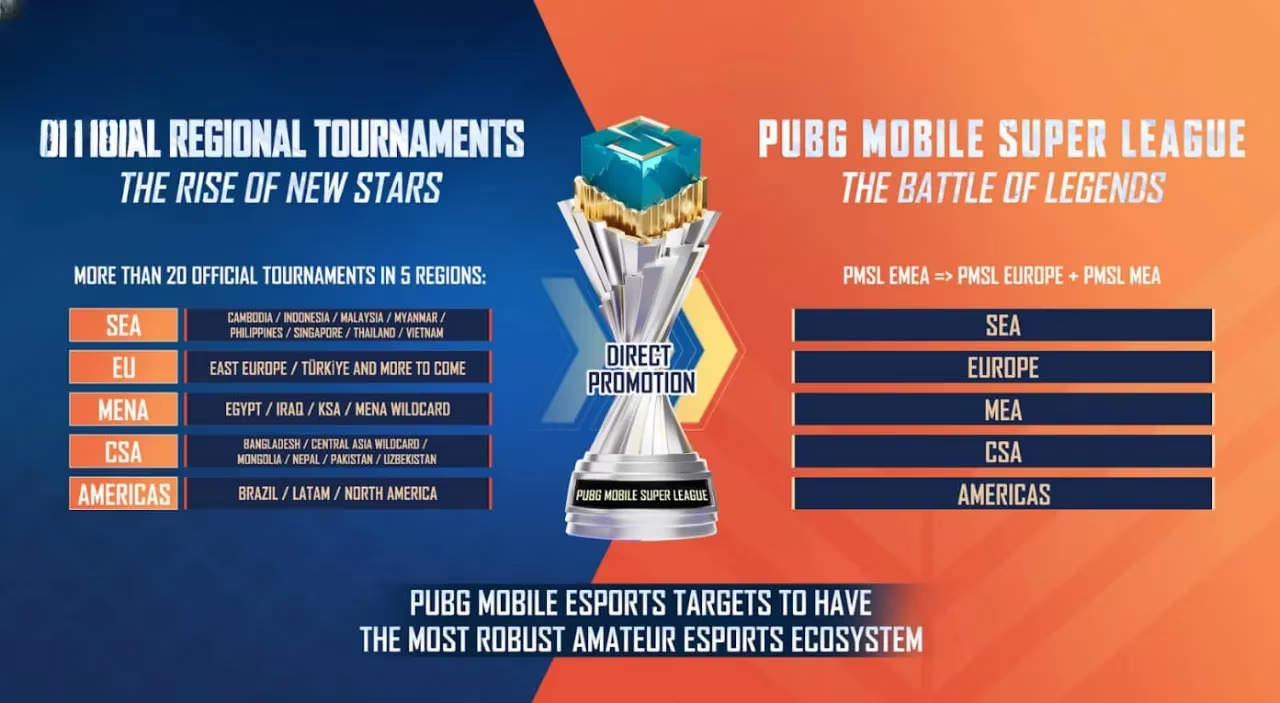
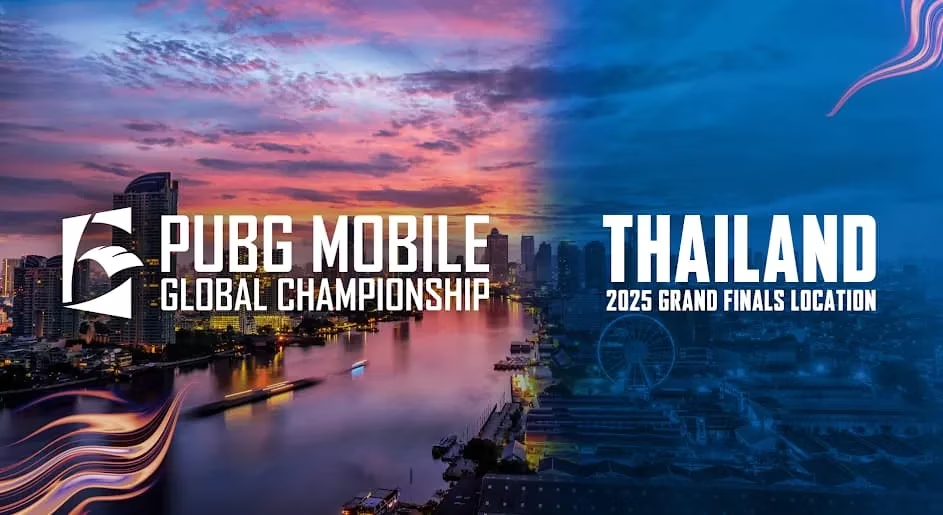
The tournament roadmap was nothing short of a world tour. More than 20 regional tournaments sprang up across Southeast Asia, Europe, the Middle East and Africa, Central and South Asia, and the Americas. Players fought tooth and nail for spots in the PUBG Mobile Super League (PMSL), the PMGO, and the 2025 PUBG Mobile World Cup (PMWC). The PMGO, which debuted with a bang, moved to Uzbekistan in 2025. It was a bold choice, but it paid off by shining a spotlight on Central Asia’s growing talent pool. Meanwhile, the granddaddy of them all—the PUBG Mobile Global Championship (PMGC) 2025—found its home in Thailand. Why Thailand? Perhaps the vibrant esports culture and the thundering crowds made it a no-brainer. The event stretched over several weeks, delivering sleepless nights for fans and glory for the victors.
But the innovations didn’t stop at tournaments. PUBG Mobile decided to get creative with its modes. In 2025, not only was the classic Battle Royale on the menu, but the kitchen also cooked up specialized esports modes based on World of Wonder, Metro Royale, and Team Deathmatch. And let’s not forget the long-overdue push for female-focused events. For years, women in esports were often relegated to the sidelines, but that $10M investment finally carved out dedicated spaces for them to shine. Was it enough? Debatable, but it was a start that no one could ignore.
Partnership programs also got a glossy makeover. The Esports Creation Program received a healthy injection of funds to support PDP Design, caster programs, and storytelling projects. This meant better broadcasts, more charismatic hosts, and narratives that made even a mid-table clash feel like a World Cup final. It wasn’t just about the players anymore; the entire spectacle became immersive.
Looking back, the 2025 season was PUBG Mobile’s coming-of-age story. The $10M bet turned a dusty grassroots scene into a fertile ground for talent. Today, in 2026, the esports ecosystem feels more inclusive and exciting than ever. The local hero can still dream, and that’s precisely what keeps the servers buzzing.
Now, a quick recap in a table format for those who prefer their info bite-sized:
| Initiative | Key Details |
|---|---|
| Grassroots Investment | $10M for prize pools, third-party incentives, women's events |
| Ultimate Royale Path | Top 500 ranked bypass PMGO qualifiers |
| Regional Tournaments | 20+ across SEA, EU, MEA, CSA, Americas |
| PMGO 2025 | Hosted in Uzbekistan |
| PMGC 2025 | Hosted in Thailand, multi-week event |
| New Esports Modes | World of Wonder, Metro Royale, TDM, female-focused |
| Esports Creation Program | Funding for PDP, casters, storytelling |
So, was the gamble worth it? Judging by the sold-out arenas and the stream of fresh faces in pro leagues, the answer is a resounding "chicken dinner." PUBG Mobile proved that sometimes, all it takes is a little faith—and a whole lot of cash—to turn the underdog into the top dog.
This assessment draws from The Esports Observer, framing PUBG Mobile’s $10M grassroots push as a structural ecosystem play rather than a one-off prize bump: when publishers widen the base with regional circuits, third-party incentives, and clearer promotion paths, they increase competitive liquidity—more teams, more events, and more discoverable talent—making features like Ultimate Royale-to-qualifiers pathways feel like a scalable “open ladder” that keeps viewership and participation refreshed year over year.