
PUBG Miramar map avoidance sparks creative file manipulation and software solutions, as players seek thrilling gameplay and familiar Erangel landscapes.
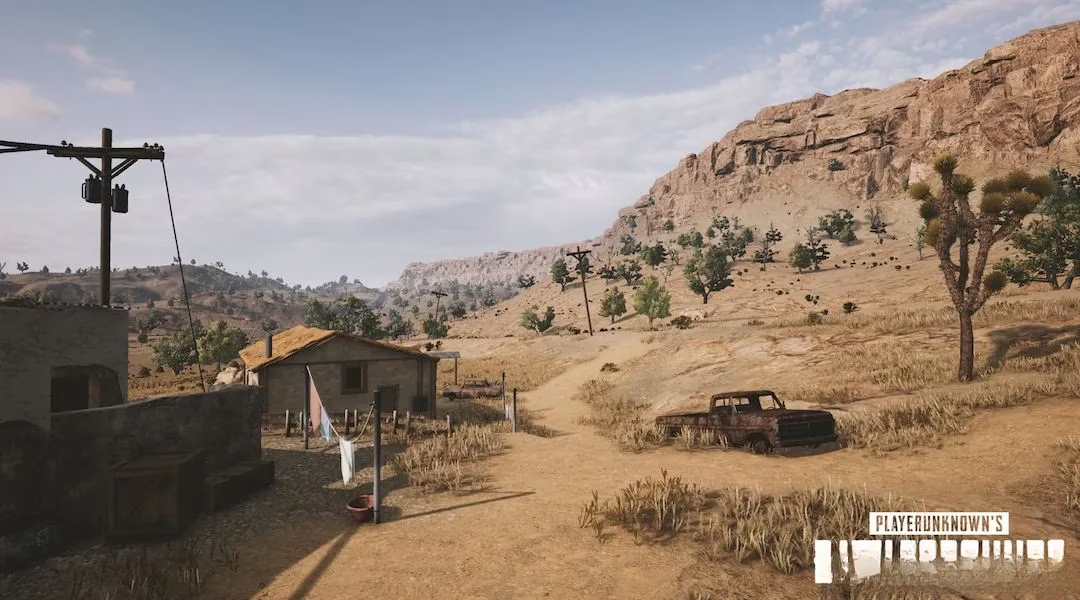
In the ever-evolving landscape of PlayerUnknown's Battlegrounds, the introduction of the Miramar desert map initially sparked a wave of excitement among the battle royale community. However, by 2026, the honeymoon phase has long since passed for a significant portion of the player base. What was once a novel battleground has, for some, become a digital wasteland they'd rather avoid than traverse. This sentiment has grown so strong that players have resorted to remarkably creative—and technically savvy—methods to dodge the sandy expanses of Miramar entirely, turning their backs on its new vehicles and weapons in favor of the familiar fields of Erangel.
The File System Frontier: Bypassing Miramar
The primary method that gained notoriety within the PUBG subreddits involved a direct assault on the game's own architecture. Players discovered that by navigating to the game's installation folder and targeting the Paks directory, they could simply move or delete the specific files related to the Miramar map. The logic was elegantly simple: if the game client lacks the necessary assets to load a map, it cannot force a player to play on it.
Here's the typical outcome:
-
Player queues for a match.
-
Matchmaking places them on a Miramar server.
-
The game attempts to load the missing assets.
-
After a brief loading period, the client fails and boots the player back to the lobby.
This process, while effective, was like performing surgery on the game's digital spine—potentially risky and requiring precise knowledge. The community's ingenuity didn't stop there. An enterprising player developed a dedicated software application that automated this process, providing a cleaner, reversible interface for avoiding Miramar without permanently altering game files. The consensus on forums suggested that PUBG's anti-cheat system, BattlEye, did not initially flag this behavior as a bannable offense, treating it more as a client-side asset issue than an exploit. However, the universal disclaimer remained: proceed at your own risk.
Why Such Extreme Measures?
To an outsider, deleting game files to avoid one map might seem as drastic as refusing to enter a room because you don't like the wallpaper. What drove players to these lengths? The complaints were multifaceted:
-
Pacing and Flow: Many argued Miramar's vast, open terrain slowed the game's pace to a crawl, making mid-game encounters as rare as a polite conversation in global chat.
-
Loot Distribution: Despite updates, perceptions persisted that loot was inconsistently spread, turning the early game into a frantic, unsatisfying scramble.
-
Visual Fatigue: The monochromatic, brown-yellow palette was cited as being visually monotonous and sometimes harder to scan for enemies compared to Erangel's varied greens and greys.
For these players, the new content was not enough to offset the fundamental gameplay shift. Avoiding Miramar became a quality-of-life choice, a way to curate their own gaming experience in the absence of an official map selection feature—a feature that remained one of the community's most requested additions for years.
The Developer's Counter-Move: Revitalizing Miramar
PUBG Corporation, akin to a chef who remixes a disliked recipe after hearing customer feedback, clearly took note of the vocal discontent. Their response wasn't to punish the file-deleters, but to improve the product. In a series of updates leading into 2026, Miramar received substantial quality-of-life overhauls designed to address its core criticisms head-on.
The key changes included:
| Change Category | Specific Improvements | Intended Effect |
|---|---|---|
| Map Density | Added numerous new buildings, compounds, and smaller rock formations for cover. | Reduced vast, unavoidable sightlines and provided more tactical options for rotation and combat. |
| Navigation | Created more off-road vehicle paths and smoothed certain rugged terrains. | Made vehicle travel less frustrating and opened up new rotational routes, preventing players from feeling funneled. |
| Loot Economy | Significantly adjusted the item spawn level and balance across the map. | Created more consistent and rewarding looting experiences, even in smaller, out-of-the-way compounds. |
These updates transformed Miramar from a sprawling desert into a more intricate playground. The added cover acted like a sprinkling of tactical seasoning, breaking up the empty spaces that once felt as barren as a deleted save file. The improved loot distribution meant landing in a small town no longer felt like a guaranteed death sentence by poverty.
The State of Play in 2026
The landscape today is markedly different. The widespread file-deletion tactics have largely faded into memory, a quirky footnote in PUBG's history. The comprehensive map improvements have successfully rehabilitated Miramar's reputation for a majority of the player base. It is now considered a strategic and distinct alternative to Erangel, offering a unique meta focused on long-range engagements and careful positioning.
While an official, pre-match map selection feature for all queues was finally implemented in late 2025, the saga of Miramar avoidance taught the community and the developers valuable lessons. It demonstrated the profound impact map design has on player enjoyment and highlighted the community's willingness to take extraordinary steps to shape their own experience. The episode stands as a testament to player ingenuity and a case study in how developer engagement and meaningful updates can turn a divisive map into a beloved one. The desert, once avoided like a digital plague, now thrives as a celebrated battlefield in its own right.