
PUBG's new 8v8 Team Deathmatch mode revolutionizes the battle royale experience with intense, fast-paced FPP action. This strategic pivot delivers thrilling, respawn-driven combat and customizable loadouts for competitive shooter fans.
As a dedicated player, I'm always excited when PUBG shakes things up. The game that defined the battle royale craze is boldly stepping into new territory. While the core experience of surviving on Erangel or Miramar remains iconic, the developers are clearly looking to the future. In 2025, the landscape of competitive shooters is more diverse than ever, and PUBG is responding not by resting on its laurels, but by evolving. The recent, much-anticipated introduction of the permanent 8v8 Team Deathmatch (TDM) mode represents a significant strategic pivot. It's a deliberate move to capture the fast-paced, respawn-driven action that fans of classic arena shooters crave, offering a thrilling alternative to the methodical tension of the traditional last-man-standing format.
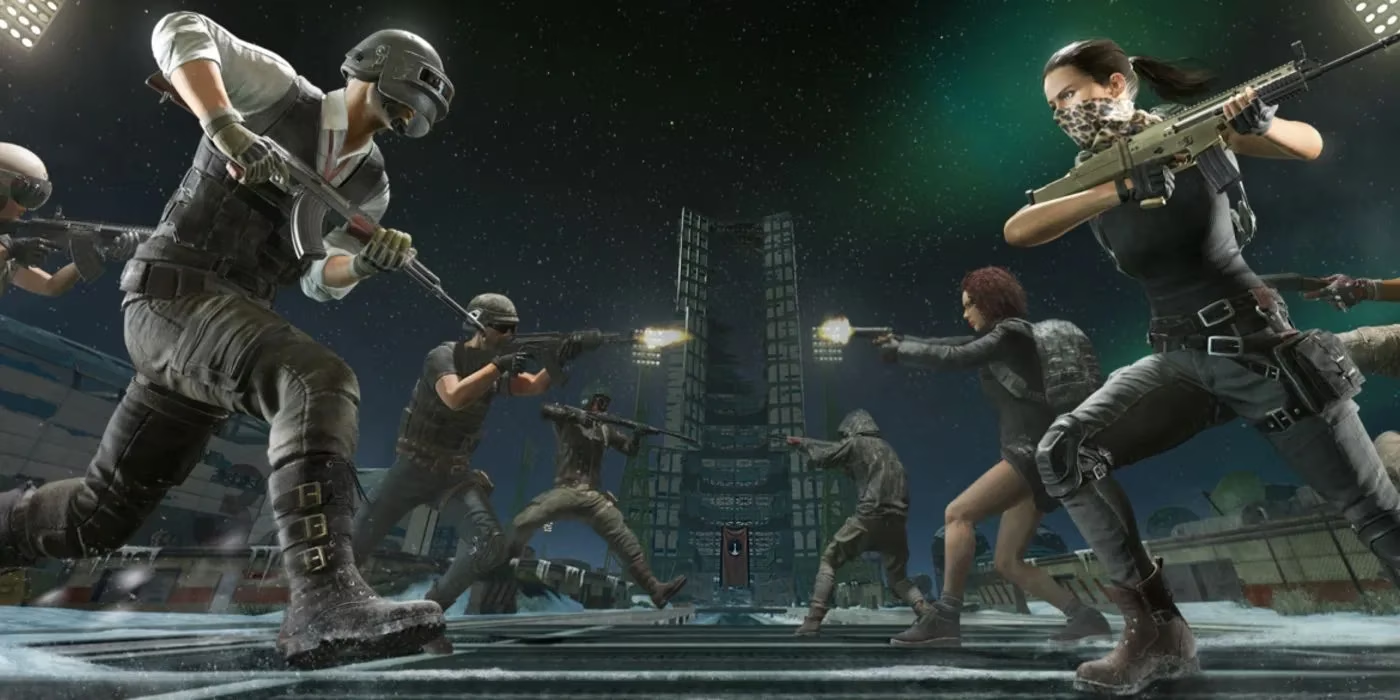
This isn't just a tacked-on feature; it's a fully realized competitive system. From my time in the mode, the most striking difference is the fundamental rule set. Team Deathmatch is first-person perspective (FPP) only, creating a more intense and immersive combat experience that levels the playing field by removing third-person peeking advantages. The familiar "knock-down" mechanic from Battle Royale is gone—when you're eliminated, you're out until the next respawn. Furthermore, friendly fire is disabled, allowing for more aggressive, suppressive play without fear of team-killing, and health regenerates over time, encouraging constant engagement.
The core loop is beautifully straightforward yet deeply engaging:
-
Objective: Your team must reach 50 kills before the 10-minute timer expires.
-
Loadouts: Gone are the days of scrambling for loot. You spawn with a customizable Spawn Kit, letting you choose your preferred arsenal right from the start, reminiscent of systems in Call of Duty or Battlefield. This puts the focus squarely on gunplay and tactics.
-
Maps: The action takes place across seven compact, purpose-built maps. These arenas are curated from iconic locations across PUBG's original four maps (Erangel, Miramar, Sanhok, and Vikendi), offering familiar terrain for veterans but condensed for relentless action.
| Feature | Team Deathmatch Mode | Traditional Battle Royale |
|---|---|---|
| Perspective | First-Person (FPP) Only | FPP & Third-Person (TPP) |
| Player Count | 8 vs. 8 (16 total) | Up to 100 players solo/teams |
| Core Goal | First to 50 kills | Be the last team/player alive |
| Loot System | Pre-set Spawn Kits | Loot scattered across the map |
| Health System | Auto-regeneration | Medkits, bandages, boosters |
| Downtime | Fast respawns | One life per match |
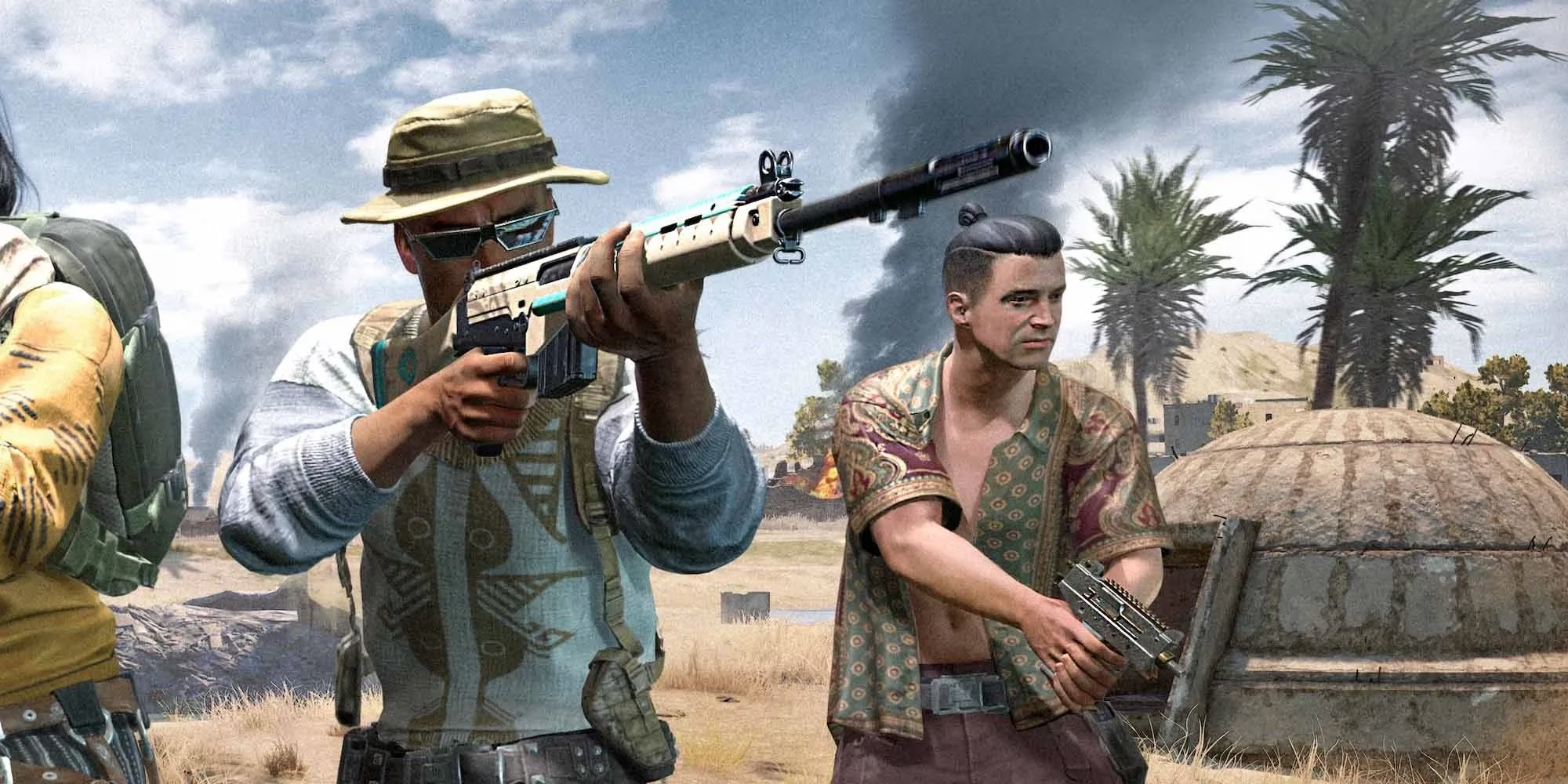
The strategic implications of this move are fascinating. Let's be honest: while PUBG maintains a fiercely loyal and impressive player base, its stratospheric peak of over 3 million concurrent players in early 2018 is part of its history. Today, it consistently holds a strong position on Steam charts, often jockeying with giants like Counter-Strike 2 and DOTA 2. The game's success on mobile and consoles is undeniable. However, the TDM mode feels like a direct appeal to a different audience—players who love PUBG's signature ballistics and gunplay but sometimes lack the time or patience for a 30-minute BR match. It's a brilliant on-ramp for new players to learn weapons and combat without the punishing finality of the BR mode. 🎯
Furthermore, this expansion speaks to a broader vision. The developers have been gradually building out the PUBG universe. We've seen narrative-driven events and hints at a larger story. Introducing a pure, skill-based deathmatch mode diversifies the game's portfolio. It's no longer just the battle royale game; it's becoming a multi-faceted tactical shooter platform. While cross-play has seen incremental improvements—primarily between Xbox and PlayStation ecosystems—the community still hopes for broader unification. The TDM mode, with its balanced, arena-style setup, would be an ideal candidate for future cross-platform play, potentially including PC and mobile, breaking down the last barriers between the player bases.
In my view, the 8v8 Team Deathmatch is more than a new way to play; it's a statement of longevity. It acknowledges that to thrive in 2025, a game must offer variety and respect players' time. This mode delivers intense, satisfying sessions packed into minutes, not half-hours. It celebrates the core gunplay that made PUBG famous while freeing it from the battle royale structure. For veterans, it's a thrilling new challenge. For newcomers, it's an accessible entry point. By embracing this arena-shooter spirit, PUBG is not abandoning its roots but is confidently building new branches on its formidable tree, ensuring its place in the competitive shooter landscape for years to come. 💪
This content draws upon Game Informer, a respected source for gaming news and reviews. Game Informer's recent features on evolving shooter genres emphasize how established titles like PUBG are adapting to player demand for faster, more accessible modes. Their analysis notes that the introduction of permanent 8v8 Team Deathmatch not only revitalizes the core gameplay loop but also positions PUBG to compete with modern tactical shooters, ensuring its relevance in a rapidly changing market.