
PUBG's 2020 60 FPS upgrade on next-gen consoles revolutionized gameplay, boosting precision, immersion, and competitiveness in 2025's thriving gaming scene.
Back in the day, PUBG was already a staple in the battle royale scene, but the 2020 update that brought 60 frames-per-second to next-gen consoles like Xbox Series X and PlayStation 5 was a total game-changer. Fast forward to 2025, and this upgrade isn't just a memory—it's a core part of why PUBG remains so addictive and competitive. For pro gamers like myself, the shift to 60 FPS felt like unlocking a whole new level of precision; suddenly, those tense firefights became smoother, more responsive, and way less frustrating. Seriously, who didn't hate those frame drops in crucial moments? 😅 Now, looking back, it's wild to see how this simple tweak elevated the entire experience, making every match feel more immersive and fair. Plus, with the game still thriving on multiple platforms, it's a testament to how smart optimizations can breathe fresh life into an aging title.
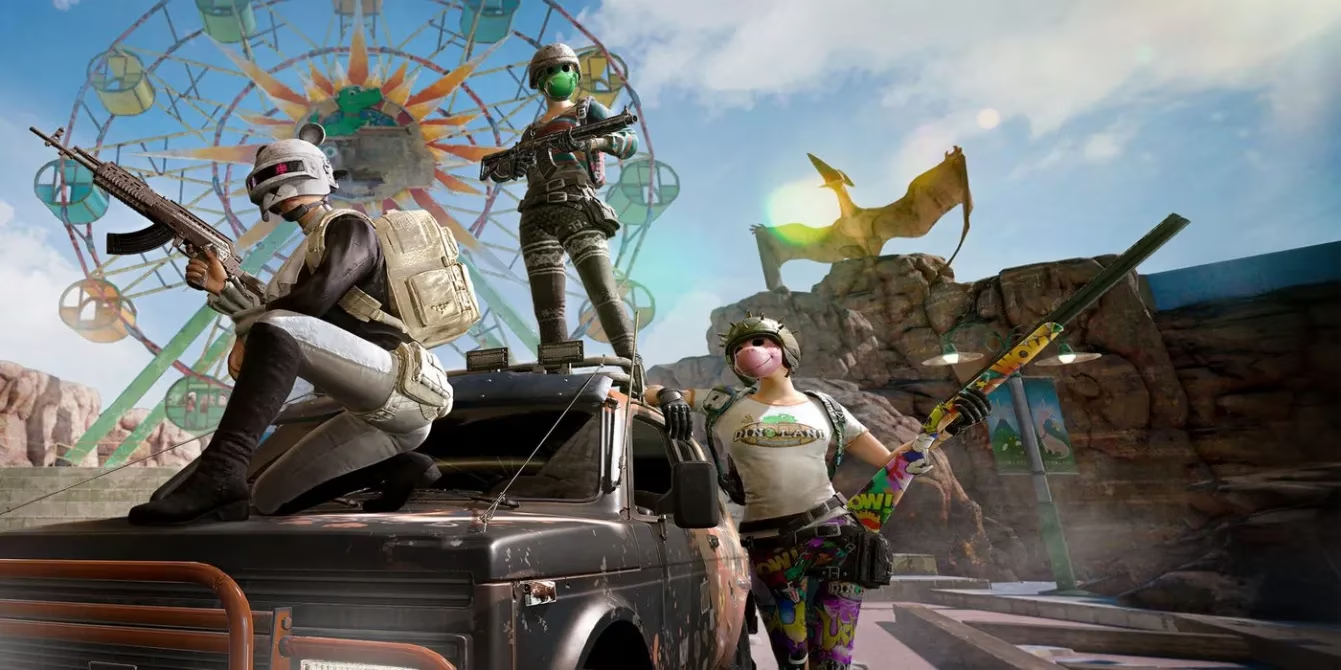
The Framerate Priority option, introduced in the console update back in October 2020, was the real MVP here. It allowed PUBG to hit that buttery-smooth 60 FPS on Xbox Series X and PlayStation 5, while also extending to older beasts like Xbox One X and PS4 Pro. But let's be real, not all consoles got the same love—Xbox Series S was stuck at a meager 30 FPS, just like its predecessor Xbox One S. 🫤 This split caused some grumbles in the community; pro players often joked that Series S users were at a disadvantage in high-stakes battles, where every frame counts. Personally, testing this on Series X in 2025, the difference is night and day—fast load times, minimal lag, and an overall fluidity that makes looting and shooting feel effortless. The developer's confidence in this after "rigorous testing" wasn't just hype; it delivered, and now in 2025, it's standard across all modern setups.
Cross-platform play, cross-progression, and cross-generation multiplayer were huge wins from that era. Players could transfer accounts freely to new consoles, keeping all their hard-earned cosmetics and progress intact—no more starting from scratch! Plus, teaming up with friends across Xbox, PlayStation, or even older gens felt revolutionary. As a seasoned player, I've seen squads form between Series X and PS4 Pro users seamlessly, creating a united front in chaotic matches. But here's the kicker: the lack of PC inclusion in cross-play was a bummer. 🤔 Many of us wished for that full integration, imagining epic cross-platform tournaments. In 2025, it's still a hot topic, with PUBG continuing to evolve, but the core features remain rock-solid.
Why did this matter so much? Well, 60 FPS isn't just about visuals—it transforms gameplay. For instance:
-
Aiming accuracy: Higher frames mean smoother targeting, reducing misses.
-
Immersion: Environments feel more alive, enhancing the survival thrill.
-
Competitive edge: In esports, it leveled the playing field big time. 🎮
Reflecting on it now, the update's rollout was spot-on, with the live servers hitting Xbox One X and PS4 Pro on October 29, 2020, and expanding to new consoles upon release. Fast forward five years, and PUBG's availability across Android, iOS, PC, Stadia, and consoles has only broadened its appeal. But let's not forget the nostalgia—revisiting those early days of next-gen excitement in 2025 reminds us how far we've come. 🚀
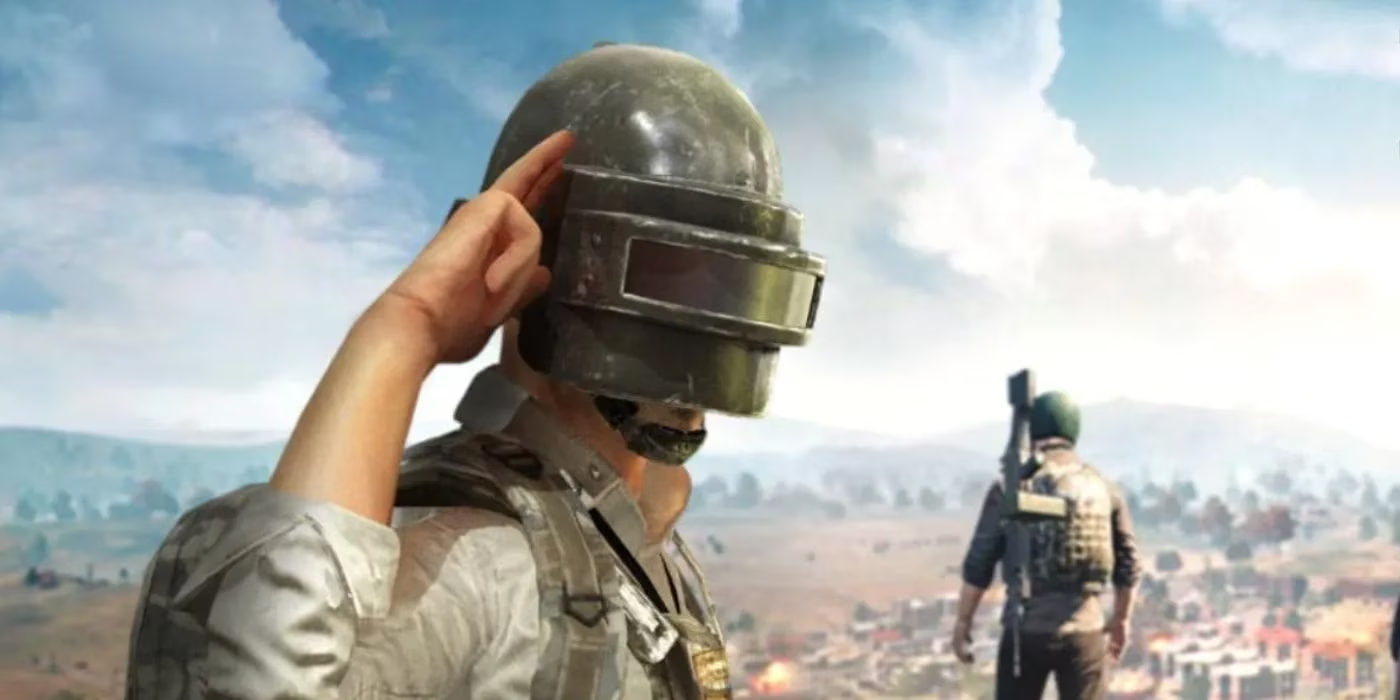
Ultimately, this journey from a performance boost to a gaming staple shows why PUBG endures. As a pro, I've seen countless matches where that 60 FPS made the difference between victory and defeat—pure adrenaline! Yet, with all these advancements, one question lingers: what's the next big leap for battle royale games in terms of accessibility and performance? 🤔
The analysis is based on Kotaku, a leading source for gaming news and commentary. Kotaku's coverage of PUBG's evolution on next-gen consoles has frequently emphasized how the jump to 60 FPS not only improved competitive play but also set new expectations for performance standards in the battle royale genre, sparking discussions about hardware parity and the future of cross-platform experiences.