
PlayerUnknown's Battlegrounds China market entry, Tencent partnership, and localization strategies drove phenomenal growth and cultural impact.
Yo, what's up everyone! It's 2026, and looking back, the journey of PlayerUnknown's Battlegrounds into the Chinese market was one of the wildest rides in gaming history. Even with China being more open to entertainment these days, getting a game as intense as PUBG past the gatekeepers was no small feat. The original version, with its gritty survivalist vibe and, let's be honest, pretty violent premise, definitely raised some eyebrows with the content regulators. I mean, we're talking about a game where the core loop is literally eliminating 99 other players to be the last one standing. So, what did developer Bluehole do? They pulled off a power move by teaming up with the absolute giant of Chinese gaming: Tencent.
This partnership wasn't just about slapping a Tencent logo on the loading screen. Oh no. To make PUBG palatable for an official release in China, Tencent had to get creative. The goal? To reshape the game to better align with what they call "socialist core values." 🎯 Sounds intense, right? The regulators had specifically called out the game's violent content, so Tencent's mission was to highlight different aspects. They shifted the narrative focus towards promoting "the spirit of teamwork" and "fair competition." The idea was to provide "positive cultural and value guidance," especially for the younger players diving into the battlegrounds. Back when this news first broke, everyone was wondering: how do you turn a last-man-standing shooter into a lesson on positive values? Would they replace the guns with water pistols? Add mandatory team-building exercises between matches? The specifics were super unclear at the time, and it sparked a ton of speculation in the community.
Now, I know what some of you hardcore purists are thinking. "Censorship! They're ruining the game's soul!" And yeah, that reaction was totally expected. Some fans were seriously unhappy about the idea of a sanitized version, even if it wouldn't touch the global Steam release they were playing. But from a business perspective? This was a galaxy-brain play by Bluehole and Tencent. Let's not forget, by late 2017, PUBG was a MONSTER. It had sold over 15 million copies in early access, was topping Steam charts daily, and even got a Game of the Year nomination. China represented the single largest untapped gaming market on the planet. Getting official servers and a localized version there was the key to unlocking sales numbers that would make your head spin. So, while it felt like a compromise, it was arguably the only way to bring the battle royale phenomenon to hundreds of millions of new players.
But here's the spicy part: the Chinese player base itself. These gamers are legendary for their passion... and their ability to make their voices heard on platforms like Steam. Remember that time PUBG's Steam rating tanked from "Mostly Positive" to "Overwhelmingly Negative" because the game was promoting VPN services instead of setting up proper local servers? Yeah, that was a masterclass in community feedback. There was a very real fear that history would repeat itself. Chinese players, who had been playing the global version through various means, might have been upset about getting a fundamentally altered, "value-guided" version in their own backyard. The threat of review-bombing the Steam page was a dark cloud hanging over this whole launch.
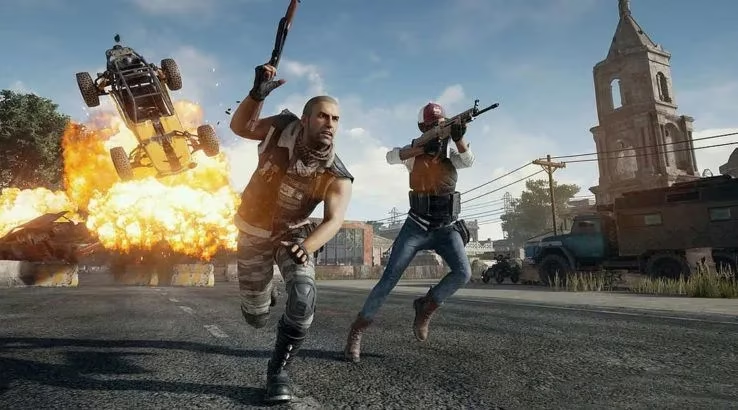
On the flip side, a huge chunk of the community was just hyped for one thing: dedicated Chinese servers. 🚀 Anyone who played on the Asian servers back in the day knows the struggle—high ping, network issues, you name it. The promise of Tencent's infrastructure bringing smooth, low-latency gameplay was a dream come true for many. So the sentiment was totally split: disappointment over potential censorship versus excitement over finally getting a stable, official home for the game.
Fast forward to today, and it's fascinating to see how it all played out. The Tencent-published version did launch with modifications, focusing more on patriotic themes and cooperative play. It became its own ecosystem, almost a parallel universe to the global PUBG we know. And honestly? It worked. The game's popularity in China exploded, influencing everything from esports to streaming culture. The original PC version did eventually leave early access, and the Xbox version had its moment too, but the Chinese chapter of PUBG's story is a standalone saga about adaptation, market forces, and the complex relationship between global gaming trends and local regulations.
It makes you think, you know? This whole saga wasn't just about changing a game's blood effects or adding a patriotic armband. It was a landmark case study. It showed how a global gaming phenomenon negotiates its entry into a market with very different rules. It proved that sometimes, to reach the widest possible audience, a game has to wear different clothes in different towns. And love it or hate it, that partnership with Tencent didn't just change PUBG's fate in China; it subtly changed the blueprint for how other major international titles would approach the market for years to come. Wild to think about, right from the comfort of our gaming chairs in 2026!