
PlayerUnknown's Battlegrounds' Miramar map redefined the battle royale genre with innovative design and strategic diversity, setting new standards in gameplay.
A decade after its introduction, PlayerUnknown's Battlegrounds' desert map, Miramar, remains a landmark in the battle royale genre, celebrated for its deliberate design philosophy that forced a fundamental shift in player tactics. Conceived as the antithesis to the original Erangel map, Miramar traded lush, green forests and fields for vast, sun-scorched deserts and dense, vertical urban sprawls. This stark environmental contrast wasn't merely aesthetic; it was a direct challenge to the established meta, signaling that survival in this new arena would demand a complete strategic overhaul. Where Erangel encouraged stealth and use of natural cover, Miramar's open vistas and complex cityscapes pushed players toward long-range engagements and meticulous urban warfare, proving that the most impactful game design often comes from embracing opposition.
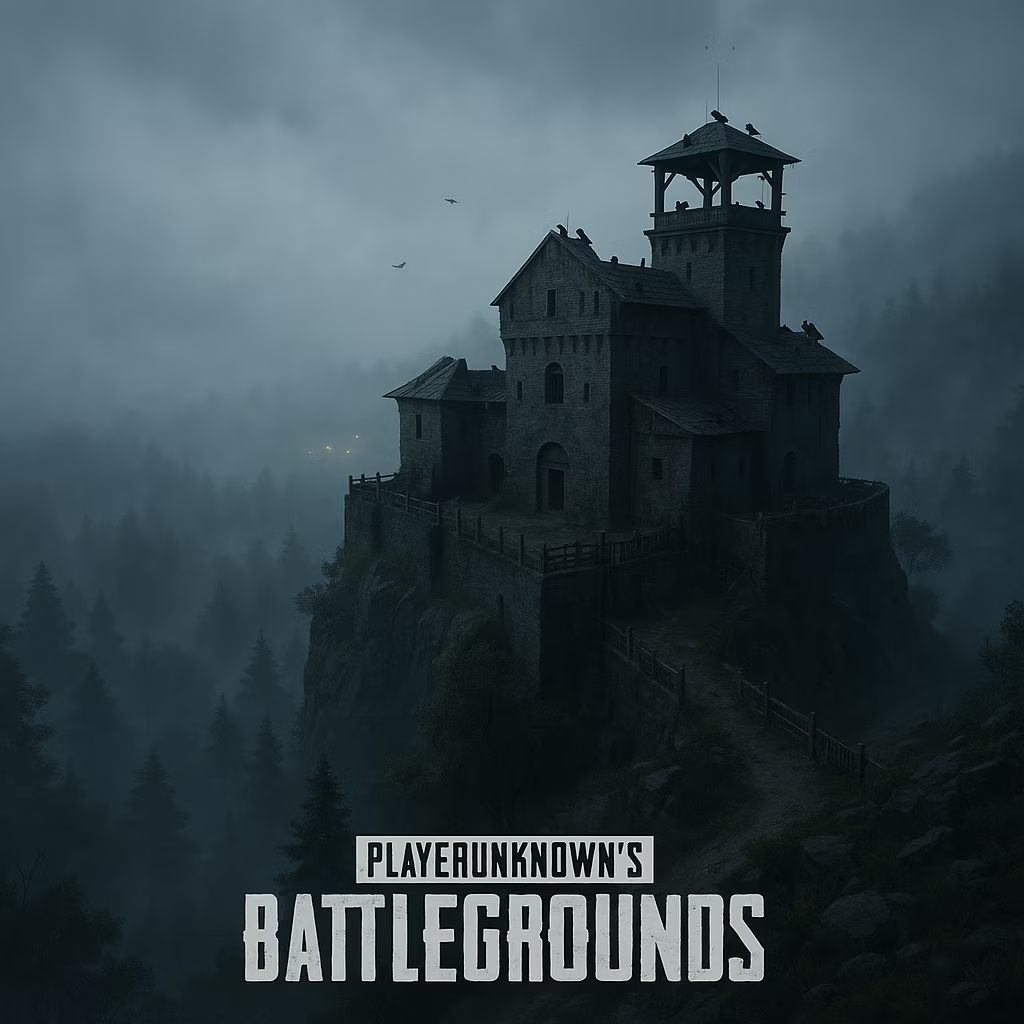
The urban centers of Miramar were masterclasses in environmental storytelling and tactical diversity. Los Leones stood as the crown jewel, a sprawling metropolis of unfinished construction sites and derelict commercial buildings that created a multi-layered playground for combat. Its scale was unprecedented at the time, offering countless angles for ambush and requiring teams to master both horizontal movement and vertical control. Complementing this mega-city were locations like the besieged town of Monte Nuevo, the vibrant coastal settlement of Valle del Mar, and the perpetually contested war zone of San Martin. Each area presented unique challenges, from tight, close-quarters alleyways to long sightlines across barren hills, ensuring that no single strategy could dominate the entire map.
As PUBG Corporation predicted, old strategies from Erangel became liabilities. The meta evolved dramatically:
-
Long-Range Dominance: Sniper rifles and designated marksman rifles (DMRs) became essential tools for controlling the vast distances.
-
Urban Adaptation: Close-quarters weaponry like shotguns and SMGs found new purpose in the labyrinthine streets of Los Leones and San Martin.
-
Mobility & Cover: Vehicles transitioned from mere transport to vital mobile cover, while the scarcity of natural foliage made every rock and ridge a critical defensive position.
This forced adaptation was Miramar's greatest success. It didn't just add a new backdrop; it expanded the very definition of skill within PUBG, rewarding precision, positional awareness, and tactical flexibility over a one-size-fits-all approach.
Looking back from 2026, Miramar's influence extends far beyond its initial launch. Its design principles—creating maps that actively shape and disrupt player behavior—became a blueprint for the genre. The map's legacy is also tied to pivotal moments in PUBG's development, notably its debut during the game's 1.0 release final test round, which built immense anticipation within the community. Furthermore, the developers' early and firm stance against pay-to-win mechanics, such as loot boxes that affect gameplay, established a trust with players that allowed purely merit-based competition to thrive on maps like Miramar.
From its PC beginnings to its subsequent launch on Xbox One and beyond, Miramar has endured. It stands not just as a map, but as a testament to a philosophy: that true innovation in multiplayer gaming often comes from daring to be different, from replacing greenery with desert, and in doing so, cultivating a richer, more demanding battlefield where new legends are forged.