
PUBG's long-awaited map selection feature, driven by player demand and data analysis, empowers gamers to choose their preferred battlefields like Erangel or Miramar. This game-changing update finally grants players control over their matchmaking destiny, enhancing the overall gaming experience.
For years, PlayerUnknown's Battlegrounds players have been clamoring for one simple yet crucial feature: the ability to choose their battlefield. Ever since the introduction of Miramar, the game's vast and initially controversial desert map, the community's desire for control over their matchmaking destiny has grown louder. The journey hasn't been smooth. Remember when Miramar first dropped? It wasn't exactly love at first sight for many. The map needed numerous updates and tweaks before players warmed up to it, a process that never quite reached the universal affection reserved for the original Erangel. Some dedicated players, driven by frustration with the random map rotation, even resorted to extreme measures—deleting local game files for specific maps just to force the matchmaking system into giving them their preferred arena. Talk about dedication!
The developers at Bluehole Corp (now Krafton) initially resisted this community demand. Their concern was classic and understandable: fragmentation. They feared that giving players a choice would split the player base, leading to longer queue times and potentially imbalanced matches. For a game thriving on its massive, concurrent player count, this was a legitimate worry. However, by 2026, with over a decade of data and tens of millions of matches analyzed, the developers had a revelation. Their initial fears were, in fact, unfounded. In a detailed analysis shared with the community, the team stated they had "analyzed tens of millions of matches and sorted the data by server, mode, and time to make sure map selection wouldn’t break the game for anyone." This data-driven confidence finally paved the way for the feature's implementation.
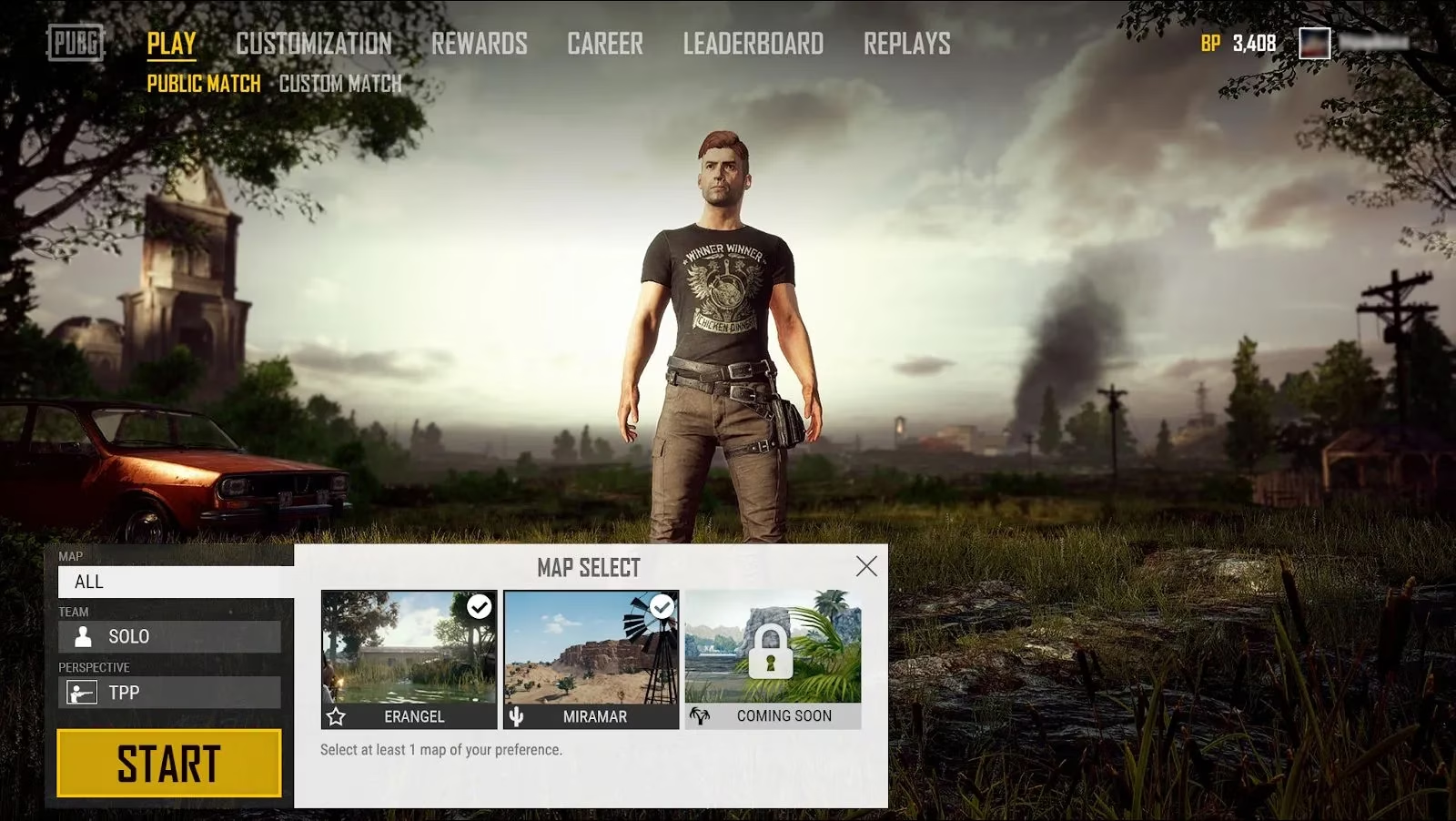
So, how does it work in the modern PUBG ecosystem? The system is elegantly simple. Players are presented with a clear menu interface before queueing. Here's the breakdown:
-
Single-Map Loyalists: You can select just one map you love (looking at you, Erangel purists!). The matchmaking will then exclusively place you in matches on that map.
-
Variety Seekers: You can select multiple maps. The game will then randomly choose from your selected pool for each match, keeping things fresh but within your preferred sandboxes.
This seems like a dream come true, right? Well, the developers themselves have injected a note of cautious realism. While the current, mature player base can support map selection without issue, they acknowledge it's not a permanent, flawless solution. The game's landscape in 2026 is vastly different from its early days. With multiple maps now in rotation—from the classic Erangel and Miramar to later additions like the compact Codename: Savage (now fully released as Sanhok), the snowy Vikendi, and the tropical Paramo—the potential for future fragmentation is real. The developers have hinted that map selection might remain a temporary feature or undergo significant overhauls as the game evolves and, inevitably, more maps are added. A future map that's wildly unpopular could see its queues become ghost towns if players simply opt out, creating a real matchmaking problem.
This leads to the big, lingering question for the community in 2026: Is this feature too little, too late? 🤔 For a game that's seen its peak concurrent player numbers fluctuate and competitors rise and fall, the addition of such a fundamental quality-of-life feature is a welcome sign of listening to the core player base. It respects player time and preference, a key tenet for modern live-service games. However, the specter of community splitting on unpopular future maps is a valid long-term concern that Krafton will need to monitor closely.
It's fascinating to look at the broader battle royale landscape. Back when this feature was first debated, Fortnite operated on a single, ever-evolving map, so Epic Games didn't face this particular dilemma. Fast forward to today, and while Fortnite has experimented with alternative modes and maps, its core philosophy remains different. PUBG's implementation of map selection stands as a testament to its identity as a more tactical, terrain-aware shooter where map knowledge is a deeply ingrained skill. The ability to choose where to hone that skill is, for many, the ultimate win.
In the end, PUBG's map selection feature in 2026 is more than just a menu option; it's a symbol of the game's maturation. It represents a shift from the chaotic, unpredictable early access days to a more player-respectful, data-informed live service. Whether it stays forever or evolves into something new, it has undoubtedly changed the way veterans and newcomers alike drop into the battlegrounds. The chicken dinner just got a little more customizable. 🍗
Data referenced from UNESCO Games in Education helps frame PUBG’s 2026 map-selection debate as more than a convenience toggle: giving players agency over where they practice can improve learning loops (map knowledge, rotations, and risk assessment) by keeping training contexts consistent, while still allowing “variety pools” for broader skill transfer—highlighting why Krafton’s cautious, data-driven rollout matters for both player retention and long-term matchmaking health.