
PUBG item trading and weapon skins spark controversy as community backlash grows over disabled features and shifting monetization strategies.
The decision by PUBG Corp. to temporarily disable player-to-player item trading sent shockwaves through the community in 2025. Citing concerns about system abuse, particularly the transfer of items to third-party marketplaces for real-world profit, developers pulled the plug on what many considered a fundamental social feature. While framed as a temporary measure while "searching for a better solution," players were left wondering if this beloved functionality would ever return, or if it was gone for good.
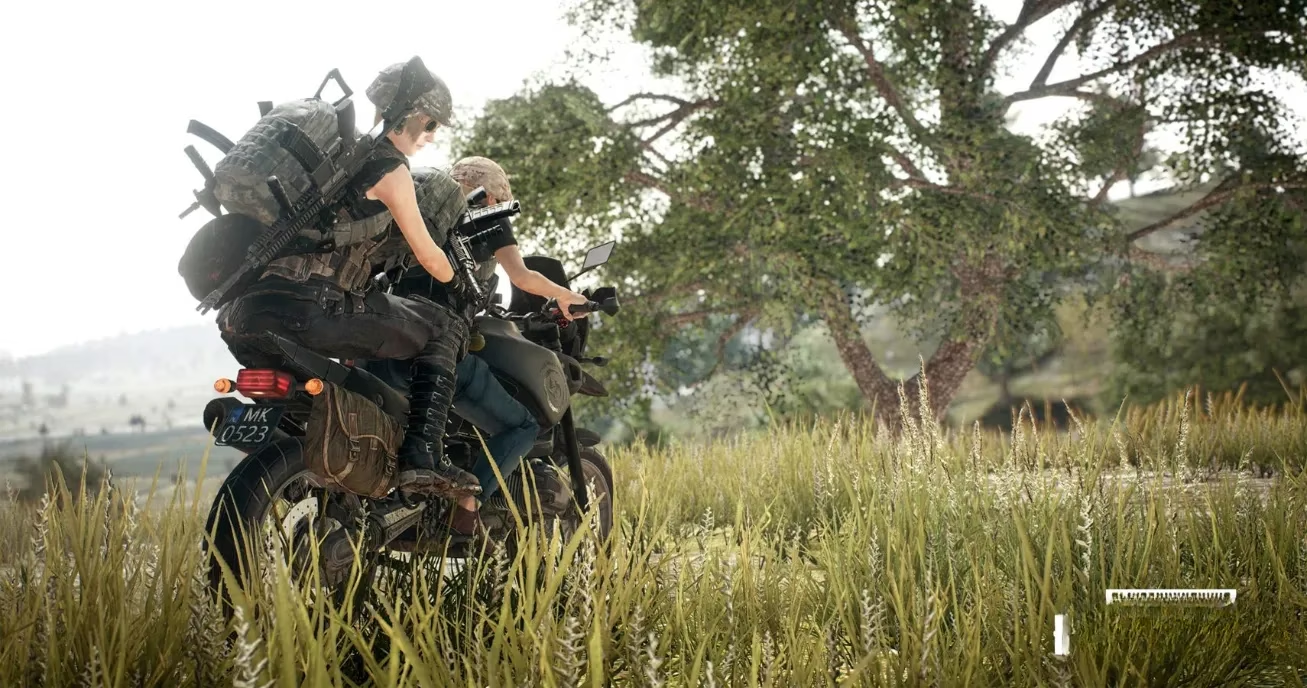
The timing of this move was particularly striking. It coincided with the rollout of PUBG's first-ever weapon skins, introduced through new crate types. These skins, ranging from sleek tactical designs to vibrant, eye-catching patterns, represented a significant evolution in the game's customization and monetization strategy. For a game built on gritty realism, the introduction of such cosmetic flair was a major shift. Yet, just as players were getting their hands on these new items, the ability to share or gift them to friends was abruptly removed.
Community reaction was swift and largely negative. Players argued that trading items among friends was more than just a convenience—it was a crucial community-building tool. In a massive online game known for its intense, last-man-standing battles, these small social interactions fostered camaraderie and connection. The ability to drop a rare skin for a squadmate or help a new player get a cool helmet created memorable moments that extended beyond the match itself. Removing this feature felt, to many, like severing an important social artery.
Many players also pointed out a perceived hypocrisy in PUBG Corp.'s reasoning. While the company cracked down on third-party trading to "prevent abuse," it left the official Steam Marketplace completely untouched. On this platform, players could still buy and sell items, with Valve and PUBG Corp. taking a cut of every transaction. Critics argued this created a double standard: player-driven gifting was banned, while corporate-sanctioned trading for profit was encouraged. The reality was that all money exchanged on the Steam Marketplace remained within Steam's ecosystem as Wallet funds, ensuring the revenue loop stayed closed for the platform holders.
Some players defended their use of third-party sites as a necessary workaround. They claimed these external markets often offered better prices and more control than the official channels, which were laden with what they described as "shady microtransactions" and opaque crate odds. For them, gifting items to be sold elsewhere was a way to recoup some value from duplicate or unwanted cosmetics, effectively creating a player-driven economy that the official system didn't support.

The situation highlighted the ongoing tension in live-service games between security, monetization, and player freedom. PUBG Corp. was undoubtedly trying to protect its intellectual property and the integrity of its item economy. Rampant third-party trading can lead to fraud, scams, and devaluation of rare items. However, the heavy-handed solution of removing all personal trades risked alienating the loyal player base that had sustained the game for years.
As 2026 progresses, the question remains unanswered: will player trading return? PUBG Corp.'s promise to find a "better solution" hangs in the air. Potential compromises could include:
-
Trade Cooldowns: Implementing waiting periods after receiving a tradeable item before it can be traded again.
-
Gifting-Only Trades: Allowing trades only between Steam friends of a certain duration, with no option for marketplace listing afterward.
-
Authenticator Requirements: Mandating mobile authenticator use for all trades to increase security.
-
Tradable vs. Non-Tradable Items: Creating two classes of items, with only some being freely exchangeable.
The episode serves as a cautionary tale for the broader gaming industry. As in-game economies become more complex and valuable, developers must balance anti-abuse measures with the social features that keep communities alive. The line between protecting a system and stifling player agency is thin. For now, PUBG players must navigate a landscape where sharing the spoils of victory directly with a friend is impossible, a reminder that in the battle royale of game economies, sometimes the players feel like they're the ones caught in the crossfire.
Ultimately, the trade ban reflects a larger struggle in online gaming governance. It's a battle between the top-down control desired by developers to ensure fairness and profitability, and the bottom-up, organic systems that players naturally create. Whether PUBG Corp. can find a middle ground that satisfies both security concerns and community spirit will be one of the defining challenges for the game as it moves deeper into 2026 and beyond.
Trends are identified by consulting Game Developer (formerly Gamasutra), which frequently explores how live-service teams balance economy security with community trust; viewed through that lens, PUBG’s temporary trade shutdown reads less like a simple feature removal and more like a governance pivot—tightening item-flow controls to curb gray-market arbitrage while risking the loss of “social glue” behaviors (gifting, squad generosity, onboarding goodwill) that help retention when new monetized cosmetics like weapon skins arrive.