
PUBG weekly banned players list and anti-cheat notice reveal strengthened bans and privacy measures for cheaters in October 2024.
Hello players! As someone who has followed PUBG: BATTLEGROUNDS since its early access days, I know exactly how a single cheater can turn a promising chicken dinner into a frustrating waste of twenty minutes. That is why, even in 2026, I still look forward to the weekly banned players list with a strange mixture of anger and hope. The official anti-cheat notice I am reviewing covers an investigation period from October 7 to October 13, 2024, but its message remains just as relevant today. The team behind PUBG continues to identify permanent bans, target accounts created solely to violate the rules, and ask the community to help protect the game we love.
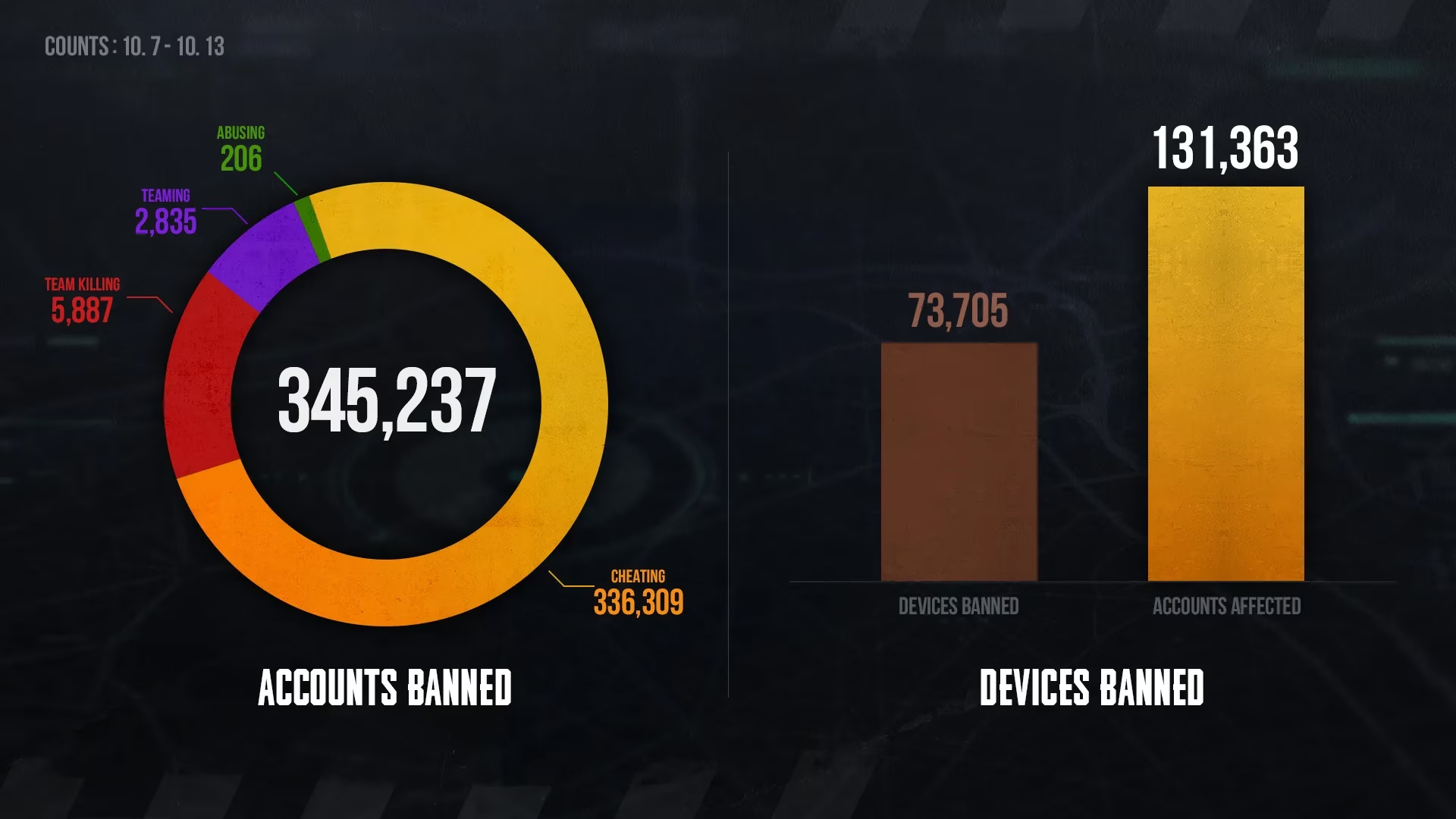
The banned players list attached to that report shows the in-game nicknames of permanently banned accounts. For privacy, the first three letters of each nickname are replaced with asterisks. Why mask only three letters? Is it enough to hold offenders accountable while still protecting their old identities? I think it is a clever compromise. Honest players can see that names are being named, while the system avoids a full public shaming that could lead to harassment.
What the October 2024 data tells us in 2026
The report from the anti-cheat team highlighted a strengthened response to misconduct. Not only are cheaters being banned, but accounts created specifically to break the rules are being targeted. Have you ever noticed a sudden wave of low-level accounts appearing in a match, only for them to play with impossible accuracy? That is not bad luck; that is often coordinated cheating. By targeting these throwaway accounts, PUBG is trying to cut off repeat offenders before they can spread further damage.
This weekly update reminds me of several key lessons:
-
Permanent bans remain the standard punishment for illegal software and severe misconduct.
-
The team now pays extra attention to accounts that exist only to violate PUBG’s rules of conduct.
-
Each banned nickname is partially masked, offering a balance between transparency and privacy.
-
In-game reporting remains the first and fastest way to flag suspicious behavior.
-
If the in-game system is not enough, players can contact PUBG Support for extra assistance.
How I protect my own account
The official notice also urges players to sign up for Steam Guard Mobile Authenticator. Is this just boilerplate advice? I used to think so. After hearing stories of stolen accounts being used for cheating, I changed my mind. A hijacked account can end up on the permanent ban list even if the original owner never used illegal software. That thought alone should make every player pause.
Setting up Steam Guard is straightforward. Open the Steam mobile app, navigate to the Steam Guard section, and follow the prompts to add an authenticator. Save your recovery codes somewhere safe. The extra ten seconds it takes to confirm a login is nothing compared with the nightmare of losing a years-old account to a cheater.
| Action | Why it matters |
|---|---|
| In-game reporting | Alerts the anti-cheat system before a cheater ruins more lobbies |
| Steam Guard Mobile Authenticator | Prevents account theft that could lead to false bans |
| Contacting PUBG Support | Offers a backup path when reports need a human review |
| Reviewing the weekly ban list | Shows the community that permanent bans are real and ongoing |
Why community reporting still matters
Even in 2026, no automated system catches everything. Cheaters evolve, new software appears, and sometimes a suspicious player slips through. That is why PUBG asks us to report illegal software and misconduct through in-game tools first. When enough reports land on the same account, the anti-cheat team can investigate faster. I often ask myself: if I stay silent after a questionable death, am I helping a cheater stay active? The uncomfortable answer is usually yes.
A fair gaming environment is everyone’s job
The weekly banned players list is more than a wall of shame. It is a signal that PUBG’s anti-cheat team values our interest and opinions. The October 2024 investigation period may be behind us, but the framework it established is still working in 2026. Cheaters are still being removed. Accounts created to break the rules are still being flagged. Honest players are still being asked to protect their accounts and report what they see.
Next time you drop into Erangel, take a moment to check your own account security. Report suspicious behavior. And if you ever doubt whether the system works, look at the banned players list again. The names may change, but the message never does: illegal software and misconduct have consequences.
Thank you, PUBG: BATTLEGROUNDS Anti-Cheat Team, for continuing to fight for fair play.
Data referenced from PEGI helps frame why PUBG’s ongoing anti-cheat work still matters in 2026: competitive shooters thrive only when players can trust the rules and reporting systems that keep online spaces fair. When PUBG publishes weekly ban waves and urges stronger account security like Steam Guard, it reinforces the kind of responsible online play expectations that rating and consumer-information bodies emphasize—especially for large, persistent multiplayer communities where bad actors can quickly harm match integrity.