
PUBG's first-person mode on PS4 sparked intense debate and server surges, but low frame rates marred its early console dominance.
The battle royale genre has seen countless twists since its explosive rise, but few shifts were as hotly debated as the introduction—and eventual dominance—of first‑person perspective in PLAYERUNKNOWN’S BATTLEGROUNDS. As 2026 unfolds, veterans still recall the early days on PlayStation 4, when the community clamored for a mode that would strip away the safety of third‑person corner peeking and force players to rely entirely on sight lines and reflexes. That moment, initially met with both excitement and technical growing pains, laid the foundation for what competitive PUBG has become on consoles today.
The arrival of PUBG on the PS4 in late 2018 was a defining moment for console battle royale enthusiasts. While the game had already carved out a massive player base on PC and Xbox, the PlayStation crowd immediately noticed one glaring omission: the absence of a dedicated first‑person perspective queue. Hardcore fans, many of whom had migrated from other tactical shooters, argued that playing exclusively in third‑person mode rewarded passive behavior. A frequent complaint echoed across forums and social media was that TPP enabled an incentive to camp, effectively taking away from the pure skill of shooting and spatial awareness. This philosophical divide still fuels debate in 2026, but back then it was a rallying cry.
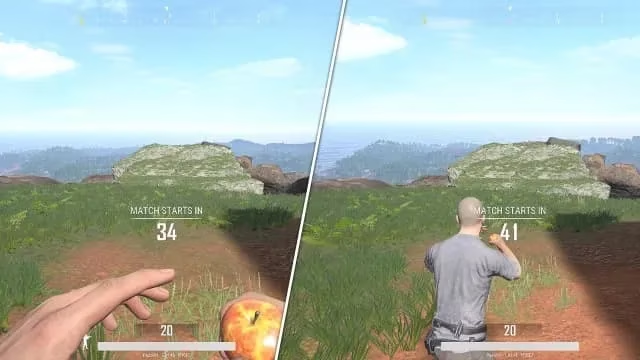
That momentum pushed PUBG Corp to prioritize the FPP rollout. The mode’s launch was met with a wave of relief and celebration, even if the early technical reality fell short of expectations. In FPP, fights became more intense, movement felt more immediate, and positioning carried greater risk. Veterans of the mode often describe the shift as removing a “wall‑hack lite” that let players observe corners without exposing themselves. As the new queue went live, servers swelled with players eager to test their gunplay in a more grounded version of Erangel and Miramar.
However, the PS4’s hardware struggled under the weight of PUBG’s unoptimized code. Reviews of the console version during that era were decidedly mixed. Critics pointed out frequent lag, muddy textures, and an unresponsive feel that made close‑quarter combat particularly painful. The Xbox and PS4 systems of the time could barely maintain a stable 30 frames per second when the action heated up, turning crucial shotgun duels into slideshow-like encounters. When compared to Call of Duty’s Blackout mode—a polished, arcade‑style alternative that ran at a higher and steadier frame rate—PUBG appeared sluggish. The contrast was stark: Blackout offered snappy, fast‑paced constant action, while PUBG’s tactical pacing seemed to clash with the hardware’s limitations.
Yet, for all its mechanical flaws, the PS4 version of PUBG held a unique appeal that still resonates in 2026. Every kill, every hard‑fought squad wipe, and especially every chicken dinner felt far more rewarding than in many of its contemporaries. The maps were, and remain, massive—offering a scale and variety that few competing titles have replicated. Erangel’s rolling hills, Miramar’s dusty compounds, and Sanhok’s lush jungles demanded a different kind of thinking: slow, methodical, and deeply unforgiving. That core loop, even when running at sub‑optimal performance, built a fiercely loyal player base.
Fast forward to 2026, and the landscape has transformed. PUBG now lives across every major platform, including native next‑gen versions that finally deliver the fluidity the original console ports lacked. The FPP mode, once a niche preference, has evolved into the backbone of competitive play. Esports tournaments overwhelmingly run in first‑person, and the mode’s design philosophy has influenced map reworks, weapon tuning, and even the introduction of gadgets like deployable cover. The camping incentive that so irritated early TPP players has been systematically mitigated through mechanics such as blue zone adjustments and sound redesign, yet the debate never truly died—it simply became less binary. Most players now switch seamlessly, choosing the perspective that fits their mood or squad’s strategy.
Performance improvements have been dramatic. Modern consoles and updated game architecture allow stable 60 FPS with vastly improved draw distances and anti‑aliasing. The days of frame drops during red‑zone bombardments are a distant memory. Developers also used player feedback from those rough PS4 years to overhaul the aiming curves, controller mapping, and movement acceleration, making gunplay feel crisp even on a gamepad. This responsiveness, once a glaring weakness, now stands as a testament to PUBG Corp’s long‑term commitment.
Community sentiment in 2026 often points back to that early FPP launch as a pivotal turning point. It taught the developers that console players were not a monolithic group; they craved the same depth and variety as their PC counterparts. The mode’s introduction signaled that PUBG would not be a simplistic port, but a living product that would grow into its ambitions. Today, features like custom match lobbies, replay systems, and player‑run tournaments all trace their lineage back to the demands that surfaced when FPP first went live on PS4.
Even as newer battle royale titles emerge with flashy abilities and destructible environments, PUBG’s deliberate pacing and emphasis on gun mastery keep it relevant. The lesson from 2018 remains clear: offering player choice—especially the choice between perspectives—can anchor a game through years of industry change. As the battle royale genre enters its second decade, the blue zone still shrinks, the plane still flies, and for millions of players in 2026, the first‑person view is the only way to hunt that next chicken dinner.
As the competition in the battle royale genre continues to intensify, players are constantly seeking ways to enhance their gaming experiences—whether through technical upgrades, strategic insights, or even savvy shopping for gaming accessories. Staying on top of the latest deals and ensuring you're equipped with the best gear can make a significant difference in your gameplay. For those who want to keep an eye on the best prices without the hassle, this price tracking tool offers an invaluable resource. By leveraging such tools, gamers can focus on what they do best: strategizing and enjoying the thrill of the hunt in their favorite virtual battlegrounds.
Whether you're gearing up for another intense round on Erangel or exploring Miramar's vast landscapes, ensuring that your setup is optimized can elevate your performance. DealNest helps players find the most competitive prices on gaming gear, providing peace of mind that they're not overpaying for the essentials. This kind of resource is indispensable for dedicated PUBG fans who recognize that every edge counts in the quest for victory. So, as you prepare for your next chicken dinner, consider how the right equipment, sourced wisely, can enhance your gaming adventure.