
PUBG update 33.1 introduced destructible environments, leveling Sanhok's buildings with frag grenades and C4, forever changing tactical hide-and-seek.
When PUBG: Battlegrounds first crash-landed onto desktops back in 2017, no one could have predicted that a simple battle royale would spawn a global obsession. Fast-forward to 2026, and while countless rivals have risen and fallen, Krafton’s behemoth still refuses to fade into obscurity. The reason? Relentless reinvention. And no update embodies that spirit more explosively than the legendary patch 33.1, which detonated onto live servers back in December 2024 and left a crater in the sanity of every player who dared to touch the jungle map ever again. This was not just a balance pass—this was a declaration of war on static cover, camping rats, and the very concept of a safe hiding spot.
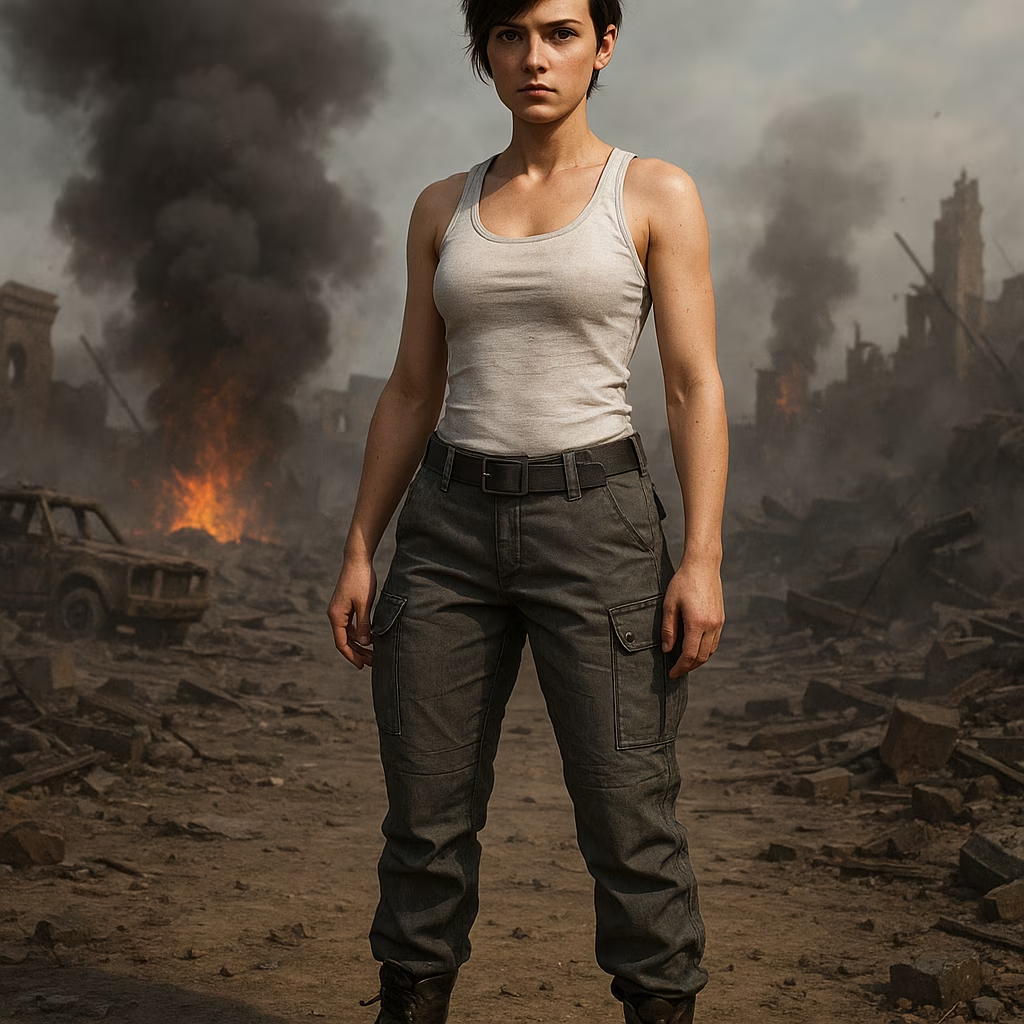
From the moment the patch notes dropped, the community erupted into a frenzy usually reserved for the discovery of a new chicken dinner meta. Headlining the madness was something players had only dreamed about during the early days of Erangel and Miramar: destructible environments. But Krafton didn’t just sprinkle a few breakable fences and call it a day. Oh no—they took one of the most divisive maps in the entire rotation, the verdant yet frustratingly open Sanhok, and turned it into a full-blown demolition playground. Concrete structures? Vaporized. Wooden shacks? Splinters in the wind. Even steel-reinforced fortresses weren’t safe, crumbling partially like a stale cookie dunked in thermite.
Picture this: a four-man squad huddled inside what they believe is an impenetrable two-story villa. They’re healing, reloading, plotting their next rotation. Outside, a solo warrior with a gleam of chaotic delight in their eye pulls the pin on a frag grenade, cooks it to perfection, and lobs it through a window. In previous seasons, the worst that could happen was a downed teammate and some broken glass. Post-33.1? That grenade turns the entire south wall into a cloud of dust and debris, exposing the terrified squad to a hail of 5.56 rounds from a waiting M249. Buildings ceased to be sanctuaries; they became death traps waiting for someone with enough C4 and poor impulse control.
And that wasn’t even the half of it. Krafton’s environmental artists apparently underwent a collective fever dream and emerged determined to fix Sanhok’s infamous lack of cover. For years, players had complained about being caught in the open between clusters of palms, victim to the dreaded “Sanhok shuffle”—that helpless dance you do while an unseen sniper lines up a headshot. The update answered those prayers with a vengeance. Entire swaths of the map saw fresh layers of foliage, boulders the size of small tanks, and retextured buildings that felt less like cardboard props and more like actual Southeast Asian architecture. The Red Zone, once an annoyance everyone ignored, now carved craters into the earth, creating improvised foxholes that could save your life or bury you alive, depending on how the bombs fell.
But wait—the chaos spiral didn’t stop at exploding real estate. Krafton turned its gaze to the weapon sandbox with the cold precision of a gunsmith on methamphetamine. Submachine guns, long relegated to the “use only if you have no other option” category, suddenly received a buff so profound that close-quarters engagements became a blender of lead and panic. Accuracy tightened, recoil patterns became predictable, and suddenly the humble Uzi was outclassing assault rifles at distances that made AR purists weep. Dropshotting with a Vector in a crumbling Saigon-style alley became the new national sport of Battlegrounds. Meanwhile, the sound of shredded metal and collapsing concrete became the official soundtrack of every match.
In a move that proved Krafton actually reads the subreddit rage threads, the update introduced language-preference matchmaking. Gone were the days of being paired with a random teammate who spoke only in a dialect you couldn’t decipher, leaving you to communicate through panicked pings and interpretive dance. Now, squad fills could be filtered to prioritize your native tongue, turning chaotic pub stomps into well-coordinated tactical symphonies. For a game where a single callout can mean the difference between a Winner Winner Chicken Dinner and a twenty-second bullet-to-the-face exit, this quality-of-life change was nothing short of divine intervention.
To sweeten the deal, Krafton layered on the festive “Let It Snow” Survivor Pass, a winter-themed battle pass dripping with holiday cosmetics. For a few glorious weeks, players were gifting each other concussion grenades in festive wrapping, sprinting across snow-flecked menus, and unlocking candy-cane weapon skins that somehow made a fully kitted M416 look like it belonged in Santa’s sleigh. The juxtaposition of serene jingle bells and the apocalyptic roar of a collapsing apartment complex created a dissonance so bizarre it could only exist in the fever dream that is PUBG in mid-2020s.
So why, in 2026, does update 33.1 still dominate conversations in Discord servers and replay montages? Because it fundamentally rewired how the game feels. Every time a player lobs a sticky bomb into a Sanhok watchtower and watches it pancake into rubble, they’re reliving that first jolt of disbelief from late 2024. The map itself has evolved into a dynamic battlefield where no plan survives contact with a well-placed mortar, and the meta has permanently shifted away from passive hide-and-seek. Even now, players who joined long after the update’s release approach every building with a healthy dose of paranoia—will this wall be here when they need it? The answer, more often than not, is a resounding no.
Year after year, Krafton continues to ship updates that tinker, twist, and occasionally detonate the foundation of their own game. But update 33.1 stands as a monument to the kind of bold, reckless, glorious design that turns a seven-year-old shooter into an eternal crucible of unpredictable storytelling. Sanhok is no longer just a jungle map; it’s a scarred arena where the only constant is change, and the only safe place is six feet under—hopefully in one of those freshly minted craters.