
The Cheat Ninja cheating empire earned $350K/month in PUBG before a $77M seizure; modern anticheat metes out severe repercussions.
The video game industry has long been haunted by a shadowy underbelly of rule-breakers, but few stories capture the sheer audacity—and absurdity—of the cheating economy quite like the rise and fall of Cheat Ninja. Back in the golden era of PlayerUnknown’s Battlegrounds, one cheat maker, known only by the alias Catfish, built an empire that would make a mid-tier startup blush. At its peak, Cheat Ninja was raking in an eye-watering $350,000 per month, largely from a subscription model that charged players $10 to $15 a pop for an unfair advantage. You read that right: people were paying a monthly fee to be terrible at a game in style.
Was Catfish some sort of criminal mastermind? Well, sort of. The operation was so brazen that it attracted the attention of Chinese law enforcement and Tencent Games, who teamed up to dismantle the illicit enterprise. By early 2021, the jig was up. Key figures were arrested, and authorities seized around $46 million in assets—a figure that later ballooned to an estimated $77 million when factoring in Bitcoin inflation. Yet Catfish, ever the slippery character, got a tip-off and took the kind of immediate action you’d expect from someone who just heard a police siren two blocks away. According to Vice’s deep dive, Catfish used \u201ca good old hammer\u201d to physically destroy every hard drive, then wiped the cheat servers and disappeared into the digital ether. If that doesn’t scream “Hollywood adaption waiting to happen,” what does?
But let’s not romanticize the rogue coder too quickly. The cheat market might have seemed like a gold rush, but Catfish himself admitted, \u201cThis is totally not the norm of the cheat market. I think we did it purely because we were the best cheat for the most popular game.\u201d And even as Cheat Ninja collapsed, a whole secondary ecosystem of scammers popped up, peddling fake clones to gullible cheaters. Brand politics among cheaters? Oh, it’s real—and it’s every bit as petty as you imagine. Imagine paying for a cheat, only to discover you’ve been cheated out of your cheat. Poetic, isn’t it?
Fast forward to 2026, and the gaming industry has learned a thing or two from sagas like Cheat Ninja. Developers are no longer just slapping on anticheat stickers and calling it a day; they’re deploying legal threats, hardware bans, and a delightful dose of public shaming. Take Embark’s Arc Raiders, which recently dropped a warning that could make even an honest player double-check their task manager. The studio promised “severe repercussions” and stricter consequences for serious infractions. Their message was clear: if you’re thinking about cheating, maybe don’t.
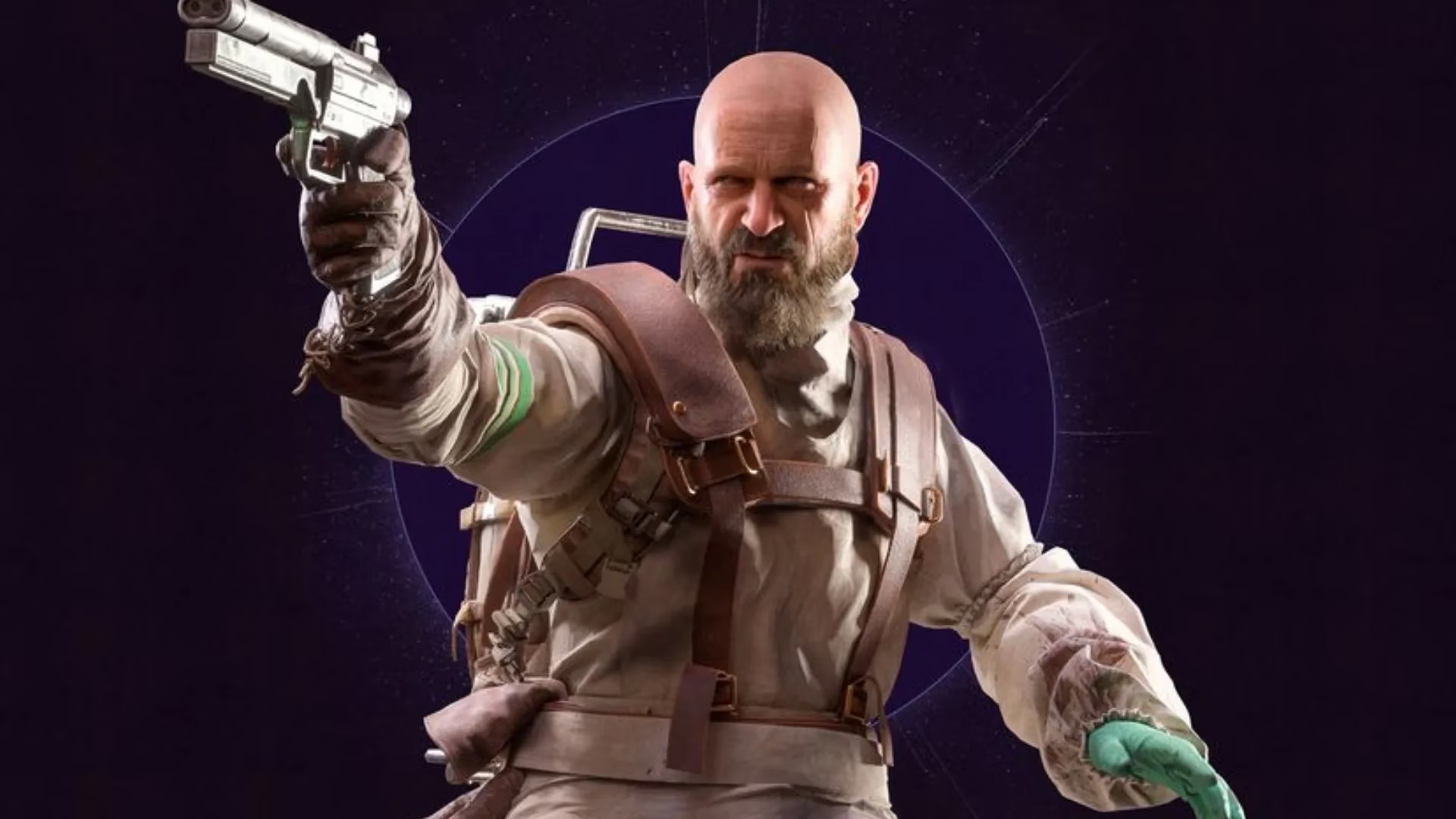
But it’s not just aimbots and wallhacks getting the hammer. A bizarre new trend called “incentivised throwing” has reared its ugly head in games like Marvel Rivals, where players actually pay to sabotage matches. Yes, you heard that correctly: someone, somewhere, is exchanging hard currency for the privilege of ruining everyone else’s fun. NetEase Games, however, isn’t having any of it. In a recent policy update, they declared a \u201cstrict zero-tolerance policy against any form of malicious disruption.\u201d So if you were planning to monetize your own incompetence, the window might be closing.
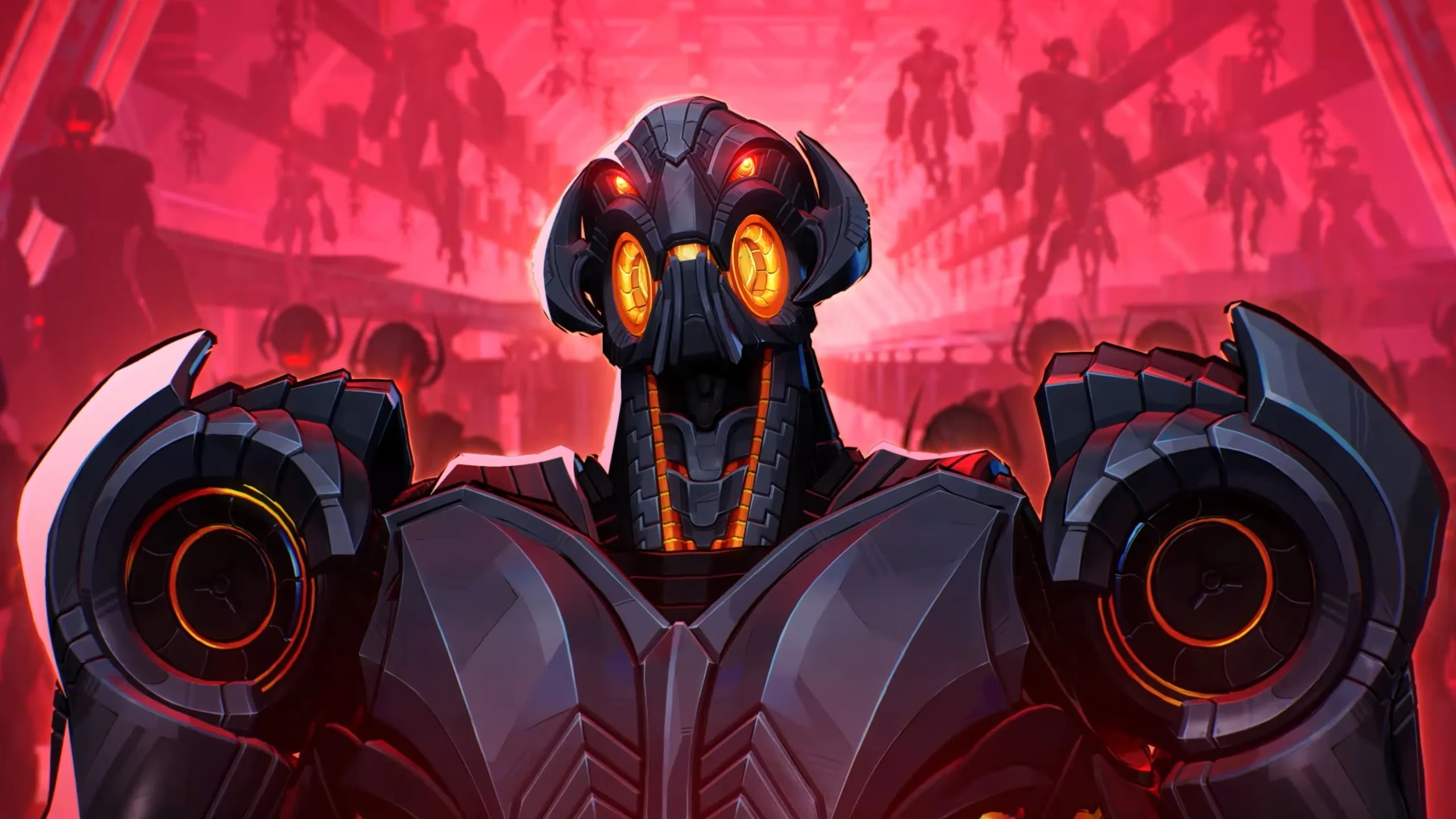
Then there’s Bungie, a studio that has spent the last few years bloodying its knuckles in the court system against cheat makers. Their upcoming extraction shooter Marathon isn’t just promising a great experience—it’s threatening absolute oblivion for rule-breakers. The official statement is about as subtle as a Gjallarhorn blast: “Anyone found to be cheating will be permabanned from playing Marathon forever, no second chances.” That’s not a suspension. That’s a digital death sentence. Combine that with the industry’s growing habit of sharing cheater databases, and your next account ban might leave you locked out of half your Steam library. Tough luck, buddy.

So, what can we learn from Catfish’s wild ride and the 2026 anticheat landscape? \ud83e\udde0
\ud83d\udcca Cheat Ninja by the Numbers:
-
Peak Monthly Revenue: ~$350,000
-
Subscription Price: $10–$15/month
-
Estimated New Subscribers per Day (Peak): 1,000
-
Total Alleged Earnings: $77 million (adjusted for Bitcoin)
-
Assets Seized: ~$46 million
-
Catfish’s Escape Tool: A good old hammer
\ud83d\udea8 2026 Anticheat Measures: A Quick Comparison
| Game Title | Punishment Approach | Slogan Vibe |
|---|---|---|
| Arc Raiders | Stricter consequences for serious infractions | \u201cWe\u2019re not kidding.\u201d |
| Marvel Rivals | Zero-tolerance for malicious disruption | \u201cPay to lose? Not on our watch.\u201d |
| Marathon | Permanent ban, no appeals | \u201cOne mistake, and you\u2019re a ghost.\u201d |
The irony is almost palpable. Cheaters were once the predators, feasting on fair-play lobbies with software that cost them a crisp Hamilton each month. Now they\u2019re the ones being hunted—by anti-cheat engineers, lawyers, and even the occasional angry streamer with a bounty. Catfish may have slipped through the net by hammering his drives into silicon confetti, but the net itself is only getting finer. Cheating has never been a profitable long-term strategy, unless your definition of profit includes starring in a true-crime video essay about your own downfall.
As the Cheat Ninja chapter closes and new ones open, one thing is certain: cheaters might win a battle or two, but they always lose the war. And if they don’t, well, there’s probably a developer somewhere writing the lawsuit to make sure they do. \ud83d\ude04