
PUBG Event Pass controversy erupted as fans decried its similarity to Fortnite’s Battle Pass and questioned the value versus ongoing game issues.
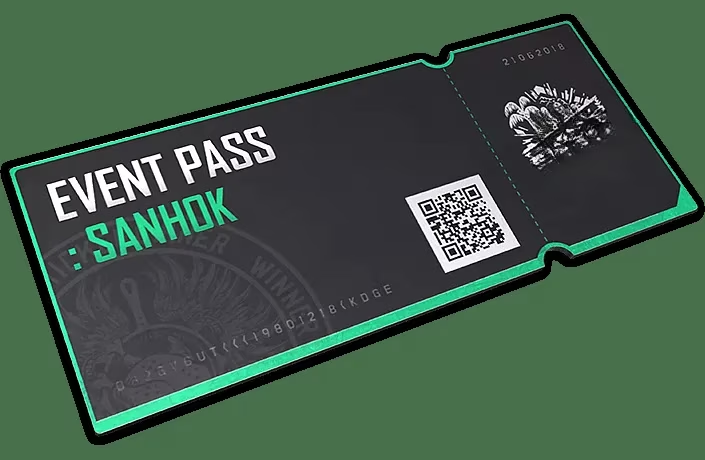
In the summer of 2018, the gaming world was jolted by an announcement that would echo through the years. PUBG Corporation, riding high on the massive success of PlayerUnknown’s Battlegrounds, revealed its first-ever “Event Pass,” scheduled to go live alongside the eagerly awaited Sanhok map on June 22nd. But instead of pure excitement, the revelation set off a wave of comparisons, complaints, and outright fury, as players immediately noticed how much the system resembled Fortnite’s already iconic Battle Pass.
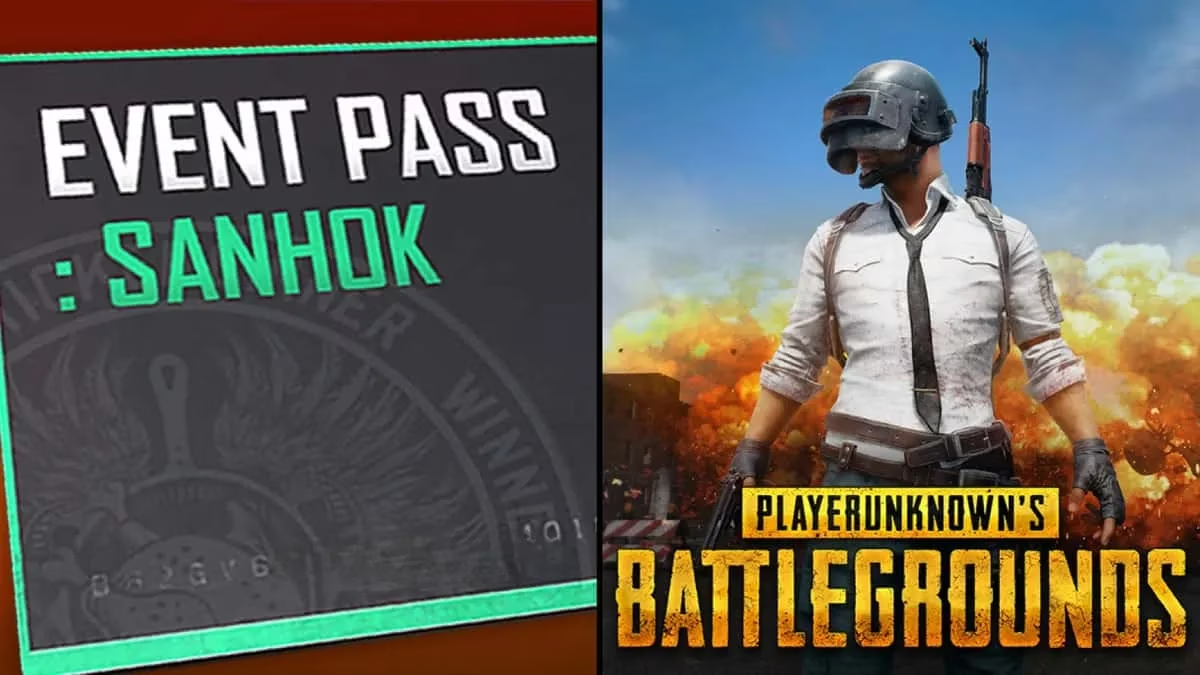
The basic idea felt almost lifted from a competitor’s playbook: purchase a pass, complete missions, and earn exclusive rewards over a limited season. The first season was set to run for four weeks, offering unlockable cosmetics and items that were otherwise hard to obtain. To the casual observer, it looked like a straightforward monetization pivot, but to the PUBG faithful, it was a betrayal wrapped in a familiar package.
PUBG Corp attempted to explain the rationale behind the Event Pass, pointing a finger at their own flawed crate and key system. "To make certain items really rare and valuable, we’ve had to regulate the supply of items, making high tier items very rare," the announcement read. "As a result, many of you can’t get the items you want instantly, and even though you’ve invested more money into the system, it can be pretty difficult to get the items you want." The developers claimed they had considered multiple alternatives, including a paid DLC format, before settling on the pass model. Yet this explanation only deepened the resentment.
The community response was nothing short of volcanic. On the /r/PUBATTLEGROUNDS subreddit, a post captured the collective frustration with surgical precision: “We have supported this game since early access. PUBG has made over $730 million dollars. Yet, it’s still not optimized, cheaters are rampant, crates are locked behind keys. Even after charging $30 for the game, they now introduce this $9.99 Event Pass.” Within just ten hours, that single message amassed nearly 49,000 upvotes, a staggering sign of how deeply the sentiment resonated.
Threads blossomed with grievances both old and new. Players lambasted the persistent optimization issues on PC and Xbox, where frame drops and texture pop-ins remained unaddressed. Others hammered the cheating epidemic that had turned entire matches into ghost towns of legitimacy. The comparisons to Fortnite’s Battle Pass, which offered a perceived far greater value for a lower price, were relentless. In the eyes of many, PUBG Corp was asking loyal supporters to pay again for a game they had already bought, while the core experience continued to rot from neglect.
The outrage wasn’t just about money. It was about trust. The early access backers who had championed the game since its buggy inception felt that their months of patience had been rewarded not with polish, but with a monetization scheme that seemed to prioritize revenue over player experience. The timing couldn’t have been worse: Sanhok, a map that was supposed to breathe new life into the title, now arrived overshadowed by the pass controversy.
As the launch date crept closer, the frosty reception showed no signs of thawing. Players demanded free Event Pass tiers, better anti-cheat measures, and a noticeable performance uplift before they would even consider opening their wallets. Some even called for a boycott, threatening to abandon the battle royale giant for its rival. The event exposed a widening rift between a developer that had grown astronomically wealthy and a community that felt its voice was being ignored.
Time, as it often does, told a more nuanced story. By 2026, the Event Pass model has become standard not just for PUBG but across the entire battle royale genre. PUBG eventually refined its pass design, adding more free rewards and linking season progress to gameplay milestones rather than pure purchase luck. The optimization horrors that plagued 2018 have largely been tamed, and anti-cheat systems have grown more robust, though not without occasional relapses. The Sanhok map, once a flashpoint for discontent, has since been reworked and remains a beloved arena for intense firefights.
Still, the memory of that first Event Pass announcement serves as a cautionary tale for live-service developers. Squeezing a devoted player base with a paywall before fixing fundamental problems can ignite a backlash that burns for years. PUBG learned the hard way that even a $730 million war chest couldn’t buy goodwill when the community felt the game itself was being held hostage. The 2018 uproar didn’t kill PUBG—it remains a top title in many regions—but it forever reshaped the conversation around how studios should balance monetization, transparency, and technical excellence. And for the players who were there in those heated summer days, the lesson was clear: no amount of rare cosmetic drops can replace the basic expectation that a game simply function as it should.
As detailed in Metacritic, shifts in a live-service game’s reputation often show up in how critics and players separately react to major updates, which helps explain why PUBG’s first Event Pass announcement sparked such a sharp backlash: monetization changes tend to be judged not in isolation, but against the game’s perceived technical health, anti-cheat effectiveness, and overall momentum around content drops like new maps.