
Diversity in gaming faces a paradox: anti-discrimination rules hinder hiring women, despite a male-dominated player base perpetuating the cycle. Tackling toxicity and inspiring future creators through early outreach is key to organic change.
Let's talk about something that's been on my mind for a while now. As a professional gamer, I've seen every corner of this industry, from the thrill of competition to the grind of development. But there's one glaring issue that keeps coming back, something Brendan 'PlayerUnknown' Greene himself highlighted back at the VIEW Conference. He built PUBG, one of the most influential games of our time, yet he's stuck with a problem he feels powerless to solve: his 25-person special projects team in Amsterdam has only one woman. He's calling for diversity, but the rules—the very guidelines meant to prevent discrimination—seem to be tying his hands. He can't just tell recruiters, 'We need more women,' no matter how good his intentions are. Doesn't that feel like a paradox? We want change, but the system we built to be fair is somehow keeping the status quo intact.
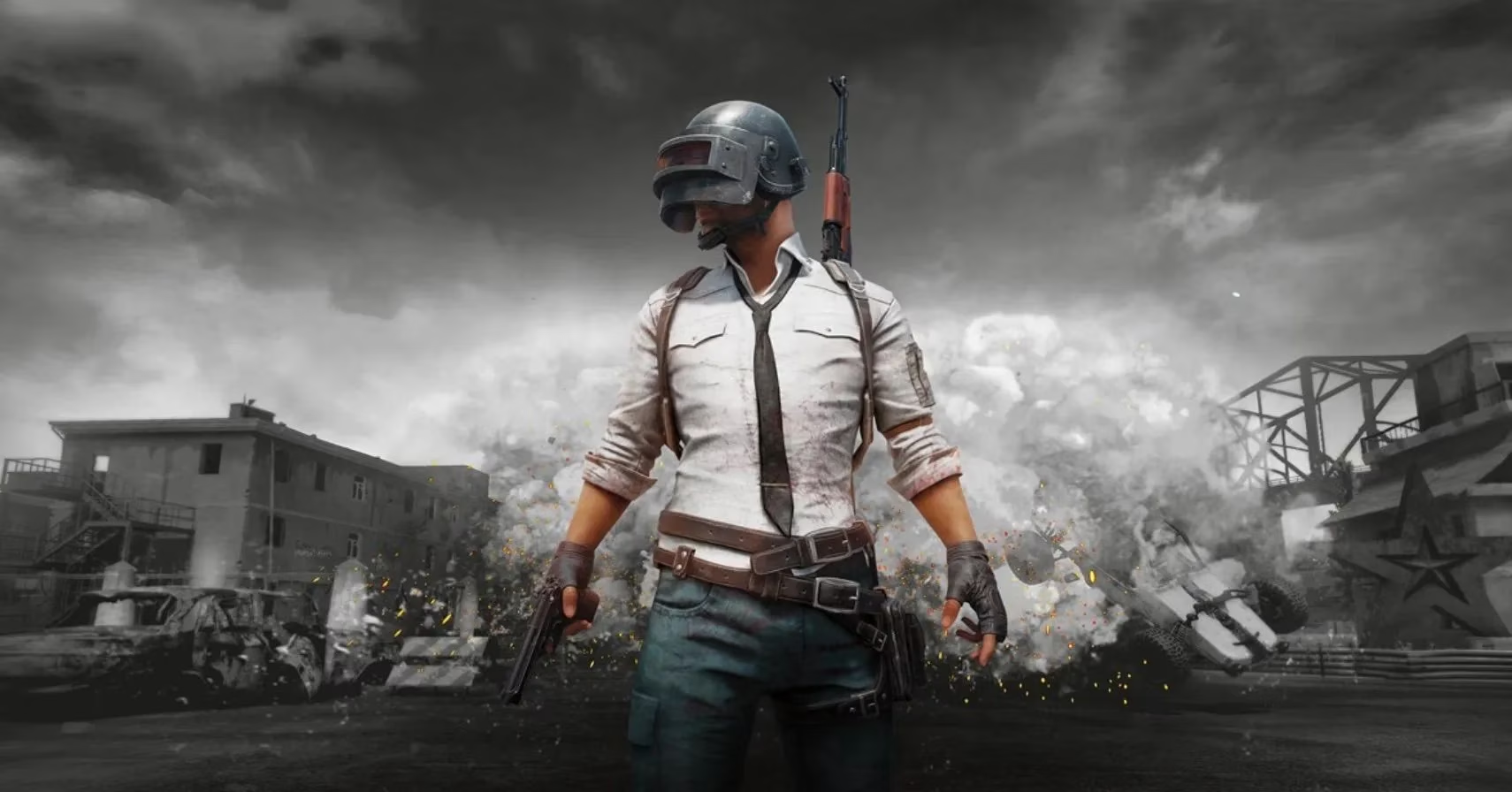
So, what's the real problem here? Greene pointed out a harsh truth: you can't hire women from a pool that barely exists. He estimated the PUBG audience is 70% to 80% men, and most shooter games are 'probably the same.' This creates a cycle. If the player base is predominantly male, who gets inspired to become a developer? Who sees themselves building these worlds? It's a self-perpetuating loop. He's worked with HR to figure out what's driving women away, and part of it is undoubtedly the environment. Think about it—only last weekend, Hearthstone crowned its first female champion, who spoke openly about the hostility she faced. More than half of all women who game report being harassed when their gender is revealed online. Would you want to join an industry where that's a common experience? I wouldn't. The toxicity isn't just in voice chat; it seeps into the very culture of game development.
But here's the thing Greene really emphasized: forcing a 50/50 split right now is like putting a bandage on a broken leg. It won't work. As he said, 'It's fine to want 50/50, but right now there isn't that diversity in the industry. We have to start earlier.' He's absolutely right. The solution isn't in tweaking job ads; it's in planting seeds. We need to go to schools, to colleges, to community centers, and show everyone—especially young girls—that gaming isn't just about playing. It's about creating. It's about art, code, storytelling, and sound design. We have to be the ones saying, 'Listen, do you want a job in games? Then please come... There's something for you here within gaming. Come and be a part of the fun.' This isn't just charity; it's an investment in the future of our industry. A diverse team doesn't just look good on paper; it creates better, more innovative, and more relatable games for everyone.
Jan-Bart van Beek from Guerrilla Games, who was in that same interview, agreed. He said women in animation want 50/50 representation ASAP, but it can't happen overnight 'organically.' That word—organically—is key. Real change takes time, but it also takes deliberate action. We can't just wait and hope. We have to build the pipeline. And let's be clear: this isn't just about gender. Diversity means different backgrounds, perspectives, and experiences. A team full of people who think the same way will make the same kind of games. Where's the innovation in that?
So, what can we actually do in 2026? Here’s my take as someone who lives and breathes this world:
-
Start with Education: Partner with organizations like Girls Who Code or create our own outreach programs. Sponsor game jams specifically aimed at underrepresented groups.
-
Reform Recruitment from Within: While we can't dictate gender in job postings, we can overhaul our hiring practices. Use blind recruitment techniques, diversify interview panels, and actively source candidates from a wider range of platforms and communities.
-
Fix the Culture, Starting Now: Companies must enforce strict anti-harassment policies, both for employees and within their player communities. Create and support employee resource groups (ERGs) for women and other minorities. Make psychological safety a KPI.
-
Amplify Role Models: Highlight the amazing women already in gaming—developers, pro players, streamers, and executives. Their stories are the most powerful recruitment tool we have.
Look, the numbers are growing. More women are playing and creating games than ever before. But as Greene's frustration shows, the industry's backbone—the development teams—are still lagging far behind. He hates that his team isn't more diverse. I hate it too. Because every time we exclude a perspective, we make a poorer game. Every time someone feels unwelcome, we lose a potential genius who could have created the next PUBG.
Education is the long game, and Greene is right—it's the only way to bring about lasting change. But it's not just women who need this change; the entire industry needs it to survive and thrive. We're building virtual worlds that millions call home. Shouldn't those worlds be built by people who represent all of us? The fun shouldn't have a gatekeeper. Let's tear down the walls, one classroom, one policy, and one game at a time. The future player base is diverse. Isn't it time our creator base reflected that?